





The Ending We Know and Love
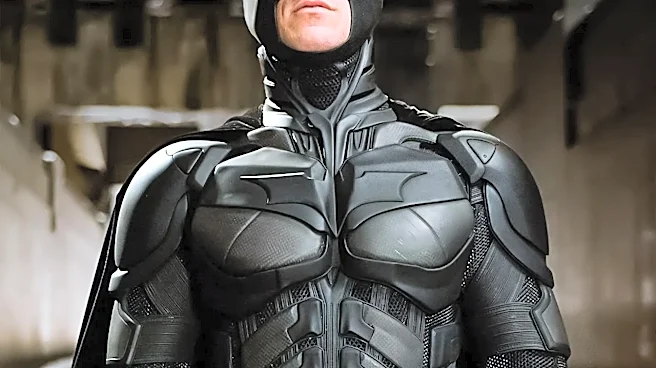
Cast your mind back to 2005. After years in the cinematic wilderness following the neon-soaked debacle of 'Batman & Robin', the Caped Crusader was back. 'Batman Begins' was dark, grounded, and serious. The film concludes with Lieutenant Gordon showing
Batman the newly christened Bat-Signal. But he has one more thing: an evidence bag containing a Joker playing card, left at the scene of a double homicide. Batman promises to look into it, and a new era of superhero filmmaking officially begins. It was a tantalizing cliffhanger that promised a bigger, more chaotic threat was on its way, cementing the film not just as a great origin story, but as the first chapter in an epic saga.
An Alternate Moral Calculation
The ending we got feels so definitive it's hard to imagine another version. Yet, the most significant change wasn't about the Joker card—that was a sequel hook writers Christopher Nolan and David S. Goyer had in mind. The more crucial difference lay in the film's climax: the final confrontation with Ra's al Ghul on the runaway train. In early script concepts and discussions, the resolution was less philosophically complex. The focus was on a more conventional hero-defeats-villain moment. The true evolution happened in crafting the specific dialogue and action that defined Batman's moral code. The version we see, where Batman declares, "I won't kill you… but I don't have to save you," was a meticulously crafted choice, not a foregone conclusion. It was a moment of moral hair-splitting that would become the bedrock of the entire trilogy.
Why the Change Was Everything
Choosing this specific ending was a masterstroke in thematic storytelling. Throughout 'Batman Begins', Bruce Wayne struggles with the line between justice and vengeance. His training with the League of Shadows presents him with a lethal, absolutist philosophy which he ultimately rejects. He refuses to be an executioner. A more traditional ending where Batman simply outsmarts or physically overpowers Ra's would have been satisfying, but it wouldn't have tested this new code. The final version forces the issue. By leaving Ra's to his fate on the crashing train, Batman establishes a rigid, almost lawyerly adherence to his "one rule." He didn't physically kill Ra's, but he also didn't intervene to save him. This decision, and the moral ambiguity it carries, elevates the film from a simple reboot to a complex character study. It establishes that Batman's greatest war will be with himself and his own principles.
Setting the Stage for The Dark Knight
This calculated ending did more than just wrap up 'Batman Begins'; it perfectly set the stage for 'The Dark Knight'. The sequel is, in essence, a feature-length interrogation of Batman's decision on that train. The Joker arrives as an agent of chaos specifically designed to attack this moral code. He doesn't want to just defeat Batman physically; he wants to prove that his rules are a "bad joke." Heath Ledger's Joker creates impossible scenarios—forcing Batman to choose who to save—that directly challenge the logic of "I don't have to save you." Had 'Batman Begins' ended with a simpler, less morally gray victory, the philosophical conflict at the heart of 'The Dark Knight' would have lacked its foundation. The power of the trilogy rests on this initial, definitive, and controversial choice that established the hero's core conflict before his greatest nemesis even arrived.