

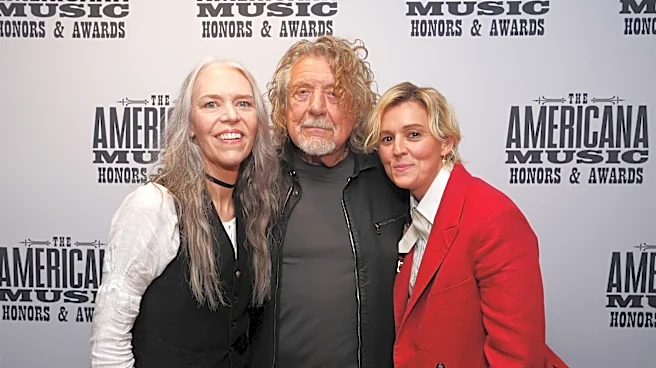
The Sound of Authenticity
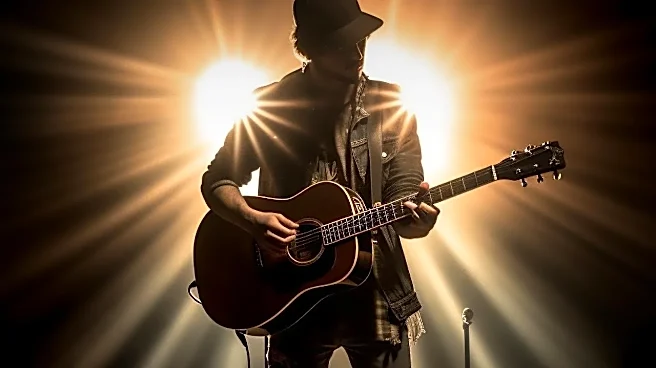
When you see an artist like Molly Tuttle, the 2026 Americana Artist of the Year, step on stage, her acoustic guitar isn't just an instrument; it's a statement. In a music world saturated with digital gloss, Auto-Tune, and stadium-sized production, the raw,
unvarnished sound of an acoustic instrument signals authenticity. Americana as a genre was, in many ways, born as a reaction to the highly polished sound of mainstream radio that took over in the 1990s. It became a haven for artists who didn't quite fit the rigid formats of rock or commercial country. The acoustic instrument is the most visible symbol of this ethos. There's no hiding behind distortion or effects; there is only the player, the song, and the honest tone coming from the strings. It's a sound that feels earned and real, which is a core currency in the Americana world.
It’s Woven into the Genre’s DNA
You can't separate Americana from its acoustic roots because the genre itself is a convergence of deeply acoustic traditions. The Americana Music Association defines it as a blend of country, folk, blues, R&B, bluegrass, and gospel. Think about the foundational artists of those movements: Woody Guthrie with his guitar, Bill Monroe with his mandolin, and the early blues pioneers of the Mississippi Delta. These forms of music were built on portable, acoustic instruments that people could play on front porches, in churches, and at community gatherings. When contemporary artists like Gillian Welch & David Rawlings (2026 Duo/Group of the Year) perform, they are tapping directly into that historical wellspring. Even as the genre evolves, the acoustic core remains the anchor that connects it to a rich, shared American musical past.
A Vehicle for the Story
More than anything, Americana is a storyteller's genre. The lyrics are paramount, often taking the form of personal confessions, detailed narratives, or sharp social commentary. Artists like Brandi Carlile, who took home Song of the Year for "Returning to Myself," build their careers on lyrical depth. The spare, organic sound of an acoustic guitar, banjo, or fiddle provides the perfect framework for the voice and the narrative to take center stage. It doesn’t compete with the story; it supports it, adding emotional texture and rhythmic drive without overpowering the words. The simplicity of an acoustic arrangement creates an intimacy that makes listeners lean in, connecting them directly to the song's emotional core in a way a wall of sound rarely can.
Not a Rule, But a Reverence
Of course, this doesn't mean Americana is strictly an acoustic-only club. The official definition notes that a full electric band is often used. Lifetime achievement honorees like Robert Plant and Tom Petty & The Heartbreakers are rock and roll legends who certainly know their way around an amplified instrument. However, the choice to use acoustic instruments is often deliberate. It shows a reverence for tradition and songwriting craft. Even rock-leaning artists in the genre often compose on acoustic guitars or feature stripped-down acoustic moments in their sets to showcase the song in its purest form. So while an electric guitarist like Mandy Fer can rightfully be named Instrumentalist of the Year, the genre's center of gravity always seems to pull back toward the resonant, honest sound of wood and steel.