


The Age of the 'Experience Economy'
Today, you can hardly scroll through social media without seeing a friend posing inside a psychedelic art maze or a fantastical, themed pop-up. Companies like Meow Wolf have turned immersive, story-driven art into a blockbuster business, with permanent
locations in multiple cities and millions of visitors. These attractions are the crown jewels of the 'experience economy,' where consumers increasingly prefer to spend money on memorable activities rather than on physical goods. It feels like a thoroughly modern phenomenon, born from the Instagram era. Yet the foundational DNA for this entire movement wasn't cooked up in a boardroom; it was forged decades ago in the dust of the Nevada desert.
The Accidental Blueprint in the Desert
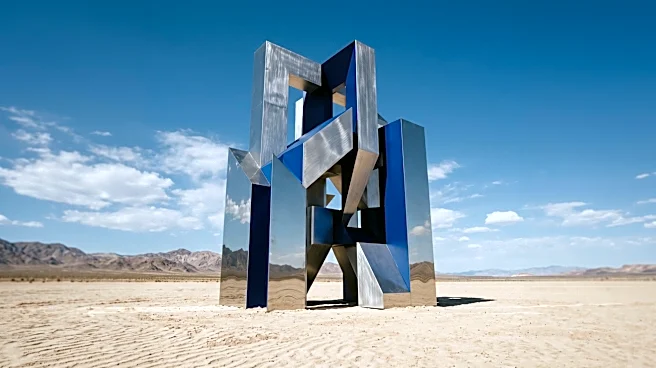
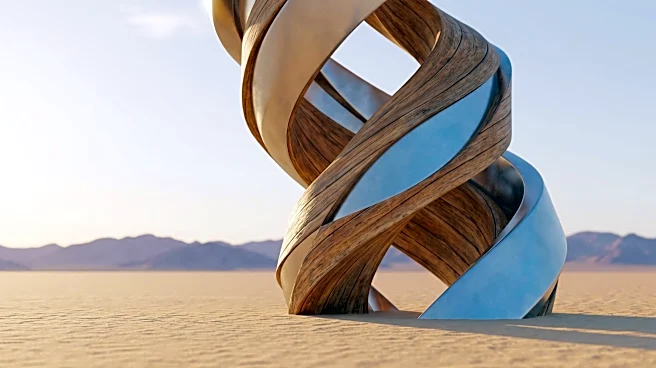
Burning Man began not as a business, but as a small gathering on a San Francisco beach in 1986. Since then, it has evolved into a temporary city of nearly 80,000 people built from the ground up each year. To the uninitiated, it might look like a chaotic art party. In reality, it’s a massive, coordinated exercise in world-building, governed by a set of production principles that unintentionally became a masterclass in creating immersive environments. Unlike a traditional festival where a central body books entertainment for a passive audience, Burning Man’s organization provides the basic infrastructure—like roads and emergency services—and then gets out of the way. The 'content'—the art, the music, the themed camps, the experiences—is created and gifted by the participants themselves.
Production by Principle, Not by Prescription
The event's production habits are guided by the 10 Principles, a code of ethics written by co-founder Larry Harvey in 2004 that reflected the culture that had already developed organically. Several of these principles are, in effect, radical production mandates. 'Decommodification' bans commercial sponsorships and advertising, creating a space unmediated by corporate messaging. This forces a different kind of creativity, where engagement can't be bought. 'Radical Participation' insists that there are no spectators; everyone is part of the show. This ethos transforms attendees from consumers into co-creators of the experience. Art is meant to be climbed on, interacted with, and even burned at the end of the week, prioritizing shared experience over permanence and monetary value. This participatory, non-commercial approach is the very essence of what makes the environment feel so deeply immersive.
From Radical Self-Reliance to Commercial Success
The influence of this model on the modern immersive boom is undeniable. Meow Wolf, which started as a scrappy art collective, operates on a similar principle of large-scale, collaborative world-building, creating narrative universes that visitors explore without a map. While Meow Wolf is a for-profit venture, its success hinges on the same core idea that Burning Man pioneered: the experience is more valuable when the audience is an active participant, not a passive observer. The goal isn't just to see art, but to be inside it, touching it, and uncovering its secrets. Many of the artists and creators who now build these commercial experiences were influenced by the ethos of Burning Man, translating its lessons in radical self-expression and communal effort into a sustainable business model that can thrive outside the desert. They prove that an audience doesn't always need recognizable IP like a superhero or a movie character; sometimes the experience itself is the main attraction.