
More Than a Stage
When the Newport Folk Festival launched in 1959, it was an outlier. Conceived as a counterpart to the Newport Jazz Festival, its founders, including George Wein and Pete Seeger, envisioned something beyond
a series of performances. They aimed to create a haven for the diverse sounds of American folk traditions, from rural Appalachian ballads to urban protest songs. In an era of rising commercialism in music, Newport was intentionally intimate and community-focused. It became a space where the lines blurred between the performer on stage and the fan on the grass, fostering an atmosphere of shared purpose and discovery. The festival was a platform not just for entertainment, but for activism and the celebration of shared cultural roots.
The Barefoot Madonna's Debut
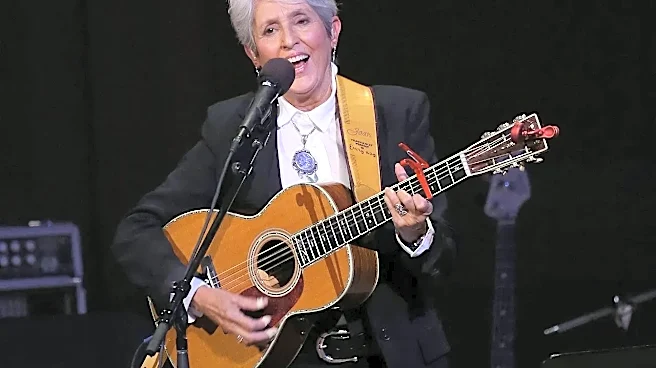
Into this environment stepped an 18-year-old Joan Baez in 1959. She was a complete unknown on the national scene when established artist Bob Gibson invited her onstage as his guest. Performing two duets, her otherworldly soprano voice captivated the audience and fellow musicians, earning her the nickname the "barefoot Madonna." That surprise appearance created a sensation and led directly to her first record deal with Vanguard Records. Baez's debut was the quintessential Newport moment: an established artist using their platform not to consolidate their own fame, but to introduce a powerful new voice to the community. It set the stage for her to become one of the festival's defining figures.
The Generous Introduction
Already folk royalty by 1963, Baez famously returned the favor. She used her headlining status to introduce audiences to a scruffy, unknown singer-songwriter named Bob Dylan. At the time, Dylan was, as one photographer put it, a relative nobody. When Baez brought him on stage to perform with her, his audience instantly multiplied. This act of generosity was revolutionary. In a competitive industry, Baez chose to share her spotlight, believing his voice and songs were essential for the folk community to hear. Together, their duets on songs like "With God on Our Side" became emblematic of the era's fusion of the personal, the political, and the poetic. This collaborative, non-commercial spirit was the bedrock of the artist-audience relationship Newport championed.
A Two-Way Conversation
The audience at Newport was never a passive entity. They were knowledgeable, engaged, and saw themselves as participants in the folk revival. Many were activists themselves, and they came to Newport not just to be entertained, but to engage with the social and political issues embedded in the music. Artists like Baez didn't just sing to the crowd; they sang with and for them. In 1963, Baez joined activists and hundreds of festival-goers in a march for civil rights through the town of Newport. Moments like these, along with the festival’s emphasis on smaller workshop stages and surprise collaborations, solidified the feeling that everyone present was part of the same movement. The music was the medium for a conversation that flowed in both directions.
An Enduring Legacy
Though the festival has evolved significantly since the 1960s, expanding to include indie rock, Americana, and pop, that core ethos remains. Tickets famously sell out before the lineup is even announced, a testament to the trust the audience has in the festival's curation. The tradition of surprise collaborations continues, with veteran artists frequently joining newcomers on stage. Baez herself has remained a presence, returning for the 50th anniversary in 2009 and making surprise appearances in recent years, reading poetry and joining younger artists like Hozier and Mavis Staples for powerful renditions of anthems like "We Shall Overcome." Her continued presence reinforces the festival’s multigenerational spirit, connecting its activist roots to the present day.