
More Than Just a Music Festival
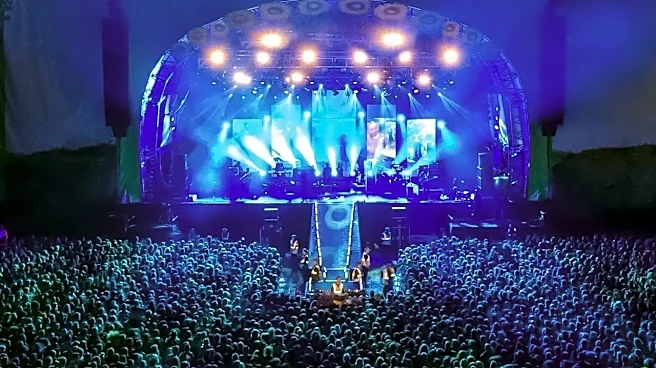
In an era dominated by mega-festivals with identical lineups and commercial sheen, the Newport Folk Festival remains an outlier. Since its founding in 1959, its purpose has been different. Staged in the historic Fort Adams State Park, it’s an event where
the lineup is often secondary to the experience itself; tickets famously sell out before a single artist is announced. This isn't Coachella on the coast. The magic lies in its commitment to discovery, collaboration, and a deep reverence for the lineage of American folk music. The festival’s nonprofit structure and intimate, multi-stage layout foster an environment of community, encouraging the kind of spontaneous, cross-generational moments that have become its hallmark. It’s a place built on the idea that music is a conversation between the past and the present.
The Living Songbook
The “American songbook” isn't a literal book, but a canon of foundational songs—tales of railroads, love, protest, and everyday life that have shaped the country's musical identity. Artists like Pete Seeger, Joan Baez, and Bob Dylan were central to the festival's early identity, establishing it as a stage where this songbook was not just performed, but actively debated and expanded. Dylan “going electric” in 1965 was a seismic event that redefined the boundaries of folk music right on the Newport stage. This spirit of reinvention continues today. The festival actively encourages artists to engage with this history, creating a living archive where foundational songs are passed down, pulled apart, and put back together in surprising new ways for contemporary audiences.
Passing the Torch in 2026
The 2026 festival was a vibrant showcase of this tradition in action. The weekend was packed with the surprise collaborations that Newport is famous for. Nathaniel Rateliff’s closing “& Friends” set became a prime example, featuring unannounced appearances from Dave Matthews and folk icon Joan Baez. The set also saw Brandon Flowers of The Killers join Rateliff for a powerful rendition of Bruce Springsteen’s “Atlantic City.” Earlier, Flowers had brought out the brothers from Dawes for his own band's song, telling the crowd they were his favorite harmonists. Hayley Williams of Paramore curated a guest-filled set that included a heartfelt duet of the Bleachers anthem “I Wanna Get Better” with Jack Antonoff and a cover of Rilo Kiley’s “Silver Lining” with Jenny Lewis. The legacy of the Grateful Dead was honored by Gillian Welch and David Rawlings, who delivered a resonant acoustic set of the band's tunes. These moments weren't just about star power; they were about connection. Lucy Dacus duetted with Brandon Flowers on a Jim Croce classic, while the Irish band Amble performed a song by the late, great John Prine, a former Newport favorite.
Why the Tradition Still Resonates
In a world of algorithm-driven music discovery, the curated, human-centric approach of Newport feels both radical and deeply necessary. For younger audiences, seeing an artist like Hayley Williams or Lucy Dacus share a stage with a legend or cover a decades-old song provides a powerful context. It’s a tangible link to a musical past they may have only encountered digitally. These collaborations serve as a co-sign, introducing artists and their catalogs to new fanbases in an authentic way. When Lizzy McAlpine performed an unreleased song inspired by James Taylor and Joni Mitchell, she was explicitly connecting her modern songwriting to the festival’s foundational figures. This act of looking back isn't just nostalgia; it's a search for authenticity and a deeper meaning in music. The communal finale, where Joan Baez led a stage full of musicians in a rendition of “America the Beautiful,” was framed as an act of reclaiming the song, perfectly summarizing the festival’s enduring purpose: to use the songbook to make sense of the present.