
The Emotional Blueprint for First Contact
For decades, the concept of alien visitation was the stuff of B-movies, typically involving flying saucers leveling national monuments or scientists in lab coats pointing at grainy photographs. It was abstract,
epic, and distant. Then came Steven Spielberg. With films like *Close Encounters of the Third Kind* (1977) and *E.T. the Extra-Terrestrial* (1982), he didn't just create classic sci-fi; he crafted the emotional and visual blueprint for how modern Americans imagine a potential first contact. He took the extraordinary and made it profoundly, unforgettably personal. The secret wasn't just in the creature design or the spaceships. It was in the geography of his storytelling: the American suburb.
Suburban Blocking: Staging the Impossible
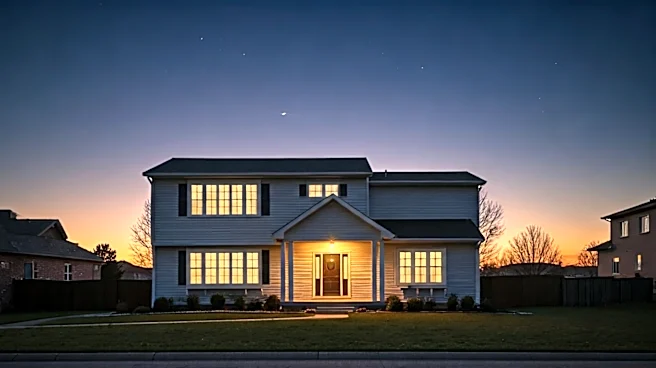
In filmmaking, “blocking” is the art of positioning actors and cameras within a scene to tell a story through movement and spatial relationships. Spielberg’s genius was his application of this technique to the most mundane of American landscapes. He turned the cul-de-sac, the messy kid’s bedroom, and the brightly lit kitchen into stages for the sublime and the terrifying. Think of the iconic moments. In *E.T.*, the alien isn’t discovered in a sterile lab but hiding among stuffed animals in a cluttered closet. The dramatic escape doesn't happen on a futuristic highway but on BMX bikes flying past a tract housing sunset. In *Close Encounters*, Richard Dreyfuss’s Roy Neary doesn’t receive a cosmic message in an observatory; he has his life-altering encounter on a dark country road, and he sculpts a mysterious mountain out of mashed potatoes at his family dinner table. This is Spielberg’s suburban blocking: grounding the impossible in the utterly familiar. The technique tells the audience, “This could happen to you. This could happen *here*.”
From the Silver Screen to Your Backyard
This cinematic language has a powerful psychological effect. By repeatedly staging encounters with the unknown in these relatable spaces, Spielberg bypassed our intellectual filters and went straight for the heart. An alien landing in a generic desert is a spectacle. An alien rummaging through your refrigerator is a personal event. It reframes the entire concept from a global news story into a domestic drama. The emotions he prioritizes are not political or scientific, but familial: a child’s capacity for wonder and friendship (*E.T.*), a father’s obsessive quest that tears his family apart (*Close Encounters*), and a family’s fight to protect their home from supernatural invasion (*Poltergeist*, which he co-wrote and produced). Because we’ve seen these scenarios play out in homes that look just like ours, with families that feel like ours, the idea of “disclosure” ceases to be an abstraction. Our pop-culture conditioning has prepared us to ask not “What does this mean for humanity?” but rather, “What would I do if that light was outside *my* window?”
The Legacy of Wonder and Domestic Anxiety
Spielberg's template isn't purely one of childlike wonder. It’s also one of domestic anxiety. The antagonists in his suburban sci-fi tales are often not the aliens themselves, but the human institutions that invade the home. The faceless government agents in hazmat suits storming Elliott’s house in *E.T.* are a violation of the suburban sanctuary. They turn a place of safety and privacy into a cold, clinical zone of observation. This duality—the awe of the unknown paired with the fear of having your personal world turned upside down—is the core of the Spielbergian alien experience. He taught us that contact would be a mix of the magical and the menacing, and that the battleground would be the American family home. It’s a powerful narrative that has been emulated, parodied, and absorbed into our collective consciousness for over 40 years.