







More Than Just Four Seasons
You’ve probably heard of the original color analysis craze from the 1980s, which famously sorted everyone into one of four seasons: Winter, Spring, Summer, or Autumn. The idea was simple: identify your skin’s undertones (cool or warm) and overall coloring
to find a palette of clothes that made you look your best. Winters and Summers had cool undertones, while Springs and Autumns were warm. For many, it was a revelation. Suddenly, they understood why that mustard sweater never felt right or why they looked amazing in royal blue. But the four-season model had its limits. What if you didn't fit neatly into one box? Many people have neutral undertones or a mix of characteristics that made the simple categories feel restrictive. This led to the evolution of the system, first into 12 seasons and now, for the most discerning, into 16.
What is the 16-Season System?
The 16-season system doesn't throw out the original concept; it refines it with more nuance. It acknowledges that color has three key dimensions:
1. Hue: The undertone (warm, cool, or neutral).
2. Value: How light or dark a color is.
3. Chroma: How clear and bright or soft and muted a color is.
By layering these dimensions, the system creates more specific sub-seasons. For example, a “Summer” isn’t just a Summer. They could be a “Light Summer” (light and cool), a “Cool Summer” (purely cool and medium-deep), or a “Soft Summer” (muted and cool-neutral). Similarly, an Autumn could be “Soft,” “Warm,” or “Deep.” Adding in the “bright” and “neutral” categories expands the original 12 seasons to 16, creating hyper-specific palettes like “Bright Winter” or “True Spring.” This granularity is designed to capture the unique blend of features in every individual, providing a far more personalized roadmap.
Finding Your Personal Palette
Discovering your season isn't just about holding a gold or silver piece of jewelry to your wrist anymore. A professional 16-season analysis is an in-person process. A trained consultant uses a set of precision-dyed fabric drapes, holding them up to your face in a specific order under neutral lighting. The goal is to see how your skin reacts to each color. The right colors will make your skin look clearer, your eyes brighter, and your features more defined. The wrong ones can cast shadows, highlight blemishes, or make you look tired.
It’s a surprisingly objective process. The consultant isn't guessing; they’re observing the subtle shifts in your complexion as different colors are introduced. By the end, you're assigned one of the 16 seasons and given a swatch book of your ideal colors—a physical tool to take with you when you shop.
The Payoff: A Wardrobe That Finally Works
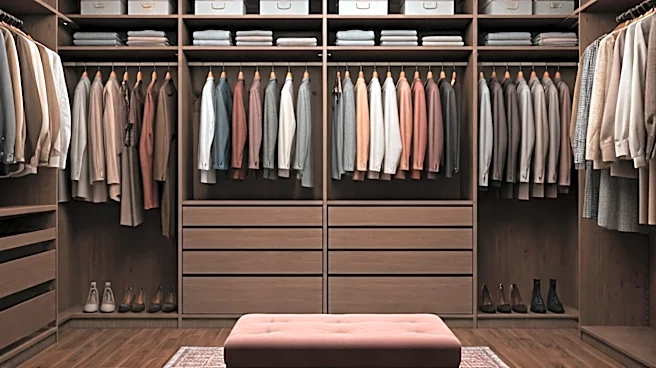
This is where the magic happens. Once you know your season, the chaos of shopping and dressing starts to disappear. Every color in your palette is guaranteed to harmonize with every other color in your palette. This means you can build a capsule wardrobe almost effortlessly. That “Soft Autumn” teal blouse will automatically go with your “Soft Autumn” cream trousers and your terracotta jacket.
The benefits are practical and profound. Shopping becomes faster and more decisive; you can scan a rack and instantly dismiss 90% of it, focusing only on your colors. You stop wasting money on trendy items that aren't flattering. Getting dressed in the morning is simpler because your closet is a cohesive collection of pieces that all work together and, more importantly, all work for *you*. It’s not about restriction; it’s about the freedom that comes from having a clear, personalized framework.