





The Case for King Didier
For Chelsea FC, Didier Drogba was more than a striker; he was an inevitability in cup finals. The bigger the game, the more certain it felt that the Ivorian powerhouse would find a way to score. Across his storied career, he scored in a staggering 10
major finals for his club, winning most of them. His defining moment, the one that cemented his legend, came in the 2012 UEFA Champions League final. Playing against Bayern Munich in their own stadium, Chelsea was on the ropes. Down 1-0 with just two minutes left, Drogba soared above everyone to head in the equalizer from his team's first corner of the game. It was a display of sheer will and power. But he wasn't done. After a dramatic extra time where a teammate missed a penalty, the game went to a shootout. Drogba, with what was thought to be his last ever kick for the club, coolly dispatched the winning penalty to deliver Chelsea its first-ever Champions League trophy. It was the ultimate single-handed rescue mission on European soccer's biggest stage.
The Legend of Big Papi
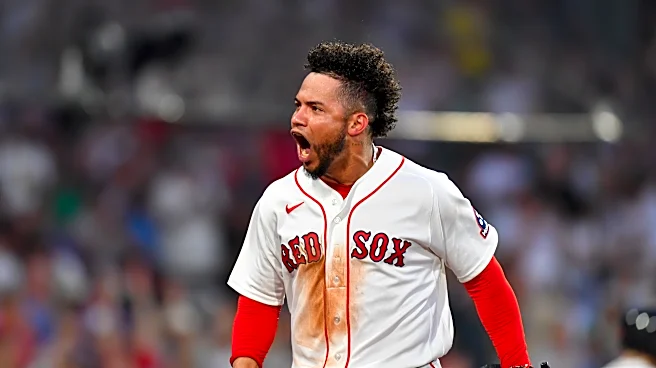
Across the Atlantic, another legend was building a reputation for thriving under pressure. David Ortiz, Boston’s beloved “Big Papi,” was the heart of the Red Sox lineup and a postseason nightmare for opponents. His legend was forged in the fires of the 2004 American League Championship Series. Down 3-0 to the rival New York Yankees, a deficit no team in MLB history had ever overcome, Ortiz put the team on his back. He delivered walk-off, game-winning hits in both Game 4 and Game 5 to keep Boston’s hopes alive. The Red Sox would go on to win the series and then the World Series, breaking an 86-year championship drought. Nearly a decade later, in 2013, he did it again. In the ALCS against the Detroit Tigers, with the Red Sox trailing late in Game 2, Ortiz came to the plate with the bases loaded. He crushed a game-tying grand slam into the bullpen, a moment immortalized by a police officer raising his arms in triumph as the outfielder tumbled over the wall. It was the defining image of another championship run.
Two Styles of Dominance
Comparing the two is a fascinating exercise in understanding clutch. Drogba's brand of heroics often felt like a force of nature in a single, winner-take-all match. His power was concentrated in the 90 or 120 minutes of a final, delivering the one perfect header or the one decisive penalty. He was a specialist in the singular moment, the man you wanted on the field when a trophy was on the line. Ortiz, on the other hand, was a force of sustained excellence over a long series. Baseball’s postseason demands a different kind of endurance. His clutch moments weren't just single hits; they were series-altering events that shifted momentum and broke an opponent's spirit over multiple games. He carried the weight of an entire city's hopes not just for one night, but for weeks at a time. In three championship postseasons, he was consistently brilliant, hitting for both average and power when the lights were brightest.
The Final Word on Clutch
So, who was more clutch? The answer depends on what you value. Do you prefer the surgical strike of a finals master, the player who guarantees a goal when a cup is on the line? That’s Didier Drogba. Or do you favor the relentless leader who can single-handedly reverse the fortunes of a seven-game series, hit after hit? That’s David Ortiz. One thrived in the concentrated pressure of a final, the other in the marathon of a playoff run. Drogba was the king of the one-off occasion, a final boss in every sense. Ortiz was the soul of a city, a symbol of resilience who refused to lose. Both men represent the pinnacle of performing under pressure, their names forever etched in the memories of fans who witnessed them snatch victory from the jaws of defeat. They didn't just win; they created moments that became folklore.