





The Anderson Repertory Company
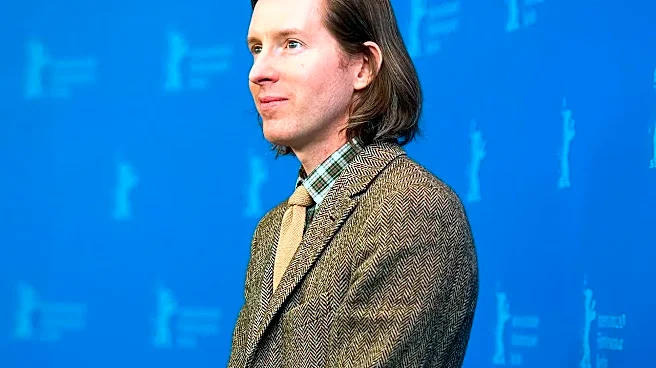
Watch more than one Wes Anderson film and a pattern emerges. You'll see Bill Murray, Owen Wilson, Tilda Swinton, Adrien Brody, or Jason Schwartzman pop up. This isn't a coincidence; it's a core feature of his filmmaking. While other directors might occasionally
reunite with a favorite star, Anderson has cultivated what is essentially a modern-day repertory theater company. This troupe of recurring actors provides a creative shorthand on set. They understand his specific, meticulous style and the deadpan, lyrical rhythm his dialogue requires. This familiarity allows for a deeper collaboration and a more cohesive feel across his body of work. For actors, it’s a chance to be part of a unique creative family; for Anderson, it's a way to ensure his very particular vision is executed by performers who are already fluent in his language. The practice started from the very beginning, with his college roommate Owen Wilson and his brothers Luke and Andrew starring in his debut, Bottle Rocket.
Betting on Character, Not Just Stardom
From a studio executive's perspective, the safest bet is to cast the biggest box-office draw available. Anderson, however, consistently prioritizes the right actor for the part, often in ways that defy conventional wisdom. He frequently casts against type, placing established stars in roles you wouldn't expect. Consider Bruce Willis, the quintessential action hero, as a lonely, gentle police captain in Moonrise Kingdom, or the classically intense Ralph Fiennes as the witty, flamboyant concierge in The Grand Budapest Hotel. These choices might seem risky on paper, but they pay off brilliantly. They allow the audience to see a different side of a familiar face, while the actor gets to play in Anderson's distinct sandbox. His loyalty extends beyond just big names; he took a chance on a then-unknown Jason Schwartzman for the lead in Rushmore after a year-long search, a role the entire film hinged on. This focus on character and chemistry over pure star power is a move that often puzzles a risk-averse industry.
The Brand Is the Real Star
What studio executives may have initially seen as a commercial risk has proven to be Anderson's greatest commercial asset. The real star of a Wes Anderson movie is the movie itself—the unmistakable aesthetic of symmetrical shots, pastel color palettes, and meticulously detailed worlds. Audiences don't just go to see a specific actor; they go for the complete “Wes Anderson experience.” This brand identity is so strong that the appearance of his regular actors has become part of the fun, like seeing old friends turn up in a new story. This devoted fanbase gives him the freedom to make unconventional choices. Bill Murray has said he’ll say yes to any Anderson project without even reading the script, and once took a Guild-minimum salary of around $9,000 for Rushmore just to be a part of it. That level of trust and commitment is rare and underscores that the project's appeal is the director's vision.
A Method to the Apparent Madness
Ultimately, Anderson's casting isn't confusing; it's a calculated artistic strategy. By building a loyal troupe, he creates a stable, trusting environment where creativity can flourish. Casting director Douglas Aibel, a frequent collaborator, notes that Anderson approaches the process with a spirit of adventure and openness, whether searching the globe for an unknown teenager or finding a novel way to use a familiar face. The actors, in turn, feel like they are part of a special theatrical company, which fosters camaraderie. The result is a cinematic universe that is entirely his own, yet feels internally consistent. The familiar faces provide an anchor for the audience as they enter another of his whimsical, melancholic, and utterly unique worlds. It’s a strategy that proves that in an industry driven by formulas, a singular vision, supported by a trusted team, can be the most powerful formula of all.