
More Than a Luxury Accessory
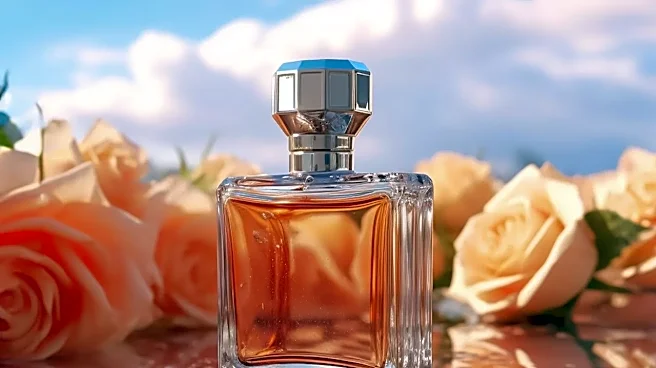
In the United States, a bottle of Dior perfume often functions as a status symbol. It’s a piece of affordable luxury displayed on a vanity, reserved for special occasions. The American approach to fragrance,
heavily influenced by marketing, leans toward clean, fresh, and distinctly unsubtle scents. Perfume is often treated as a final, powerful accessory, like a statement necklace—its job is to get you noticed. The dominant preference is for fragrances that signal cleanliness and energy. This perception is reinforced by advertising that sells a lifestyle of glamour and aspiration, often tied to a celebrity face. The result is that we see the bottle, we see the star, but we often miss the soul of the scent itself.
A Story in Every Bottle
The original Miss Dior, launched in 1947, is a perfect example of this disconnect. For many, it’s just another classic floral perfume. But it was created as an olfactory embodiment of Christian Dior’s revolutionary "New Look" collection, which revitalized fashion after the bleakness of World War II. The fragrance was named for his sister, Catherine Dior, a decorated French Resistance hero who had survived a concentration camp. The scent, with its notes of gardenia, rose, and patchouli, wasn't just pretty; it was a defiant statement of hope, beauty, and a return to life. To wear it was to wear a piece of history and resilience. This narrative depth—the idea of perfume as a story rather than just a product—is central to the French appreciation of fragrance and is often lost in its American translation.
The 'Sauvage' Misconception
Perhaps no Dior fragrance highlights this cultural gap more than Sauvage. In the U.S., it’s known as a wildly popular, potent men's fragrance. The conversation often stops at its strength and projection. However, the name itself, which translates from French to "wild" or "unspoiled," was intended to evoke a raw, natural masculinity. The marketing, featuring Johnny Depp in vast, open landscapes, aimed for a narrative of a man escaping civilization to find his true essence. But this message was largely overshadowed in the U.S. by a major controversy. The name "Sauvage" and the use of Native American imagery in a 2019 campaign were widely criticized as insensitive and appropriative, given the historical use of the word "savage" as a slur against Indigenous peoples. This backlash effectively replaced Dior's intended story with a completely different, and far more painful, American one.
Perfume as Identity, Not Armor
At its core, the misreading comes down to a fundamental difference in philosophy. French perfume culture often treats fragrance as an intimate part of one’s identity, something worn for oneself as much as for others. It can be changed daily to match a mood, an outfit, or a memory. It’s less about projecting a loud signal and more about creating a personal aura. Chandler Burr, a noted fragrance critic, once summarized the difference: Americans wear fragrance to say, 'Don't run away, I'm clean,' while Europeans wear it to say, 'Come to me, I'm sexy.' While a generalization, it points to a real difference: one culture uses scent for presentation, the other for personal expression and seduction. Dior’s more complex, narrative-driven creations are designed for the latter, asking the wearer to engage with the scent on a deeper level.