






The Classic Sports Bar with a Twist
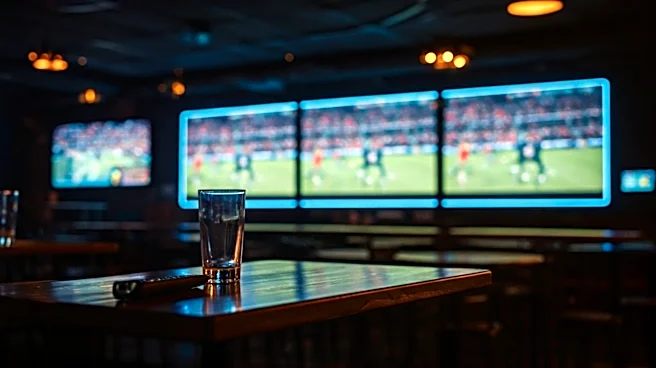
Let’s get the obvious one out of the way first, but with a crucial caveat. Any old sports bar won't do. A cavernous, loud space screams “we are not working.” Instead, look for a sports bar that has a separate, bookable private or semi-private room. This
is your command center. It gives you control over volume (critical for faking a client call), a dedicated server so you’re not fighting for attention, and a contained environment that keeps the celebratory cheering from alerting the entire city. Call ahead and ask for “the mezzanine,” “the back room,” or “the party space.” Frame it as a “team lunch,” which isn't even a lie. The key is separation; you want the atmosphere of the game without the chaos that gives you away.
The Upscale Hotel Bar
Think about it: hotel bars are designed for discretion. They are masters of the sophisticated daytime drink and are accustomed to seeing people in business attire huddled around laptops. They almost always have large, high-quality TVs, but the sound is rarely blasting, which is perfect for your needs. The vibe is professional, the seating is comfortable (often plush couches and armchairs), and the Wi-Fi is usually top-notch. You can plausibly claim you were meeting an out-of-town client. While pricier, the cover it provides is invaluable. No one bats an eye at a group in suits watching a screen intently in a hotel lobby bar. It’s the perfect corporate camouflage.
The Brewery Taproom
Breweries have become the modern-day community center, and many have adapted their spaces for daytime use. They often have huge interiors, long communal tables perfect for a large group, and multiple projectors or screens. The key advantage here is the casual-but-productive aesthetic. Amidst the freelance writers and startup teams, your office group will blend right in. The noise level is typically a low hum, not a roar, and many have outdoor or semi-outdoor spaces if the weather is nice. Bonus: many taprooms don’t have full kitchens, instead relying on food trucks. This can be a strategic advantage, allowing you to keep the outing feeling more like a casual, extended lunch break than a full-blown party.
The Under-the-Radar Restaurant
Forget the main dining room. Your target is a restaurant with a large, well-defined bar area that happens to have a few strategically placed TVs. Think upscale American grill or a modern Italian place—not a white-tablecloth establishment. During lunch hours, these bar areas are often sparsely populated but fully staffed. You get the benefit of a full menu, proper seating, and a generally low-key environment. The TVs are often there as an amenity, not the main event, meaning you can watch the match without being in a place that’s *only* about the match. This is the spot for the office that wants good food and a slightly more civilized escape, making the “long team lunch” excuse entirely believable.
The Corporate Event Space (for Hire)
For the ultimate power move—especially for a can’t-miss event like a World Cup final or championship game—ditch the pretense of sneaking and just make it official (sort of). Many cities have small, private event spaces or even movie theaters available for hourly rental. They come equipped with massive screens, professional sound systems, and Wi-Fi. You can order catering and have a completely private, controlled environment. While this requires a bigger budget and a designated organizer (probably you), it’s foolproof. You can frame it as a “team-building event” or “morale booster.” It’s bold, it’s beautiful, and there’s zero chance of a manager from another department stumbling upon your secret.