




Ever wonder what makes a horror movie truly scary? It’s not just the monster, but the cinematic language used to build dread. Once you learn to spot the director’s tricks, watching your favorite Halloween films becomes an entirely new experience.
The Jarring Power of the Jump Cut
A jump
cut is an abrupt transition between two shots of the same subject, creating a jarring, unnatural skip in time. In most films, editors work hard to make cuts invisible, guiding your eye smoothly from one shot to the next. Horror directors, however, use jump cuts to do the opposite: they deliberately break continuity to put you on edge. Our brains are wired to perceive motion and time as a continuous flow. A jump cut violates that expectation, creating a micro-shock. It’s the cinematic equivalent of a loud noise in a quiet library—sudden, disruptive, and attention-grabbing. Think of the chilling, stuttered movements of Samara in 'The Ring' as she emerges from the television; the effect is achieved with a series of jump cuts that make her advance feel glitchy and inhuman. The technique throws off our internal rhythm, forcing a physical reaction before our conscious mind can even process what just happened.
The Terrifying Promise of Empty Space
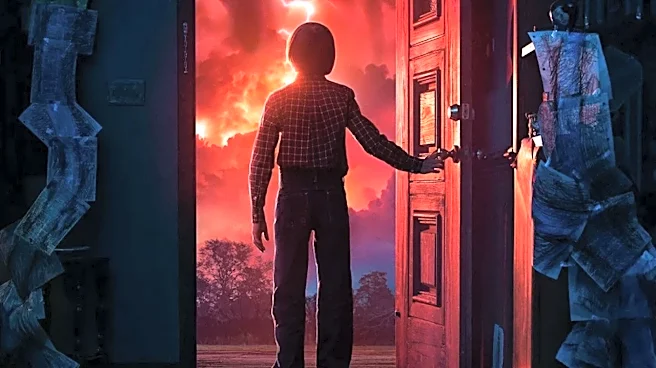
What you don't see is often scarier than what you do. This is the principle behind the use of 'negative space'—the empty parts of the frame that surround the main subject. In a typical shot, the subject is the focus. But in horror, directors use empty hallways, dark corners, and vacant doorways to create a palpable sense of dread. Our minds are pattern-recognition machines; we instinctively try to fill in the blanks. When a director frames a character on the far left of the screen, leaving a vast, dark expanse on the right, our eyes are immediately drawn to that void. We expect something to emerge from it. This visual imbalance makes the character seem vulnerable and isolated, while turning the audience into active participants in their own anxiety. We scan the shadows, waiting for the inevitable. The director uses our own imagination against us, building suspense by letting us anticipate a threat long before it ever appears on screen.
The Art of the Reveal
In horror, timing is everything, especially when it comes to revealing the monster. There are two primary schools of thought: the slow burn and the sudden shock. The slow-burn approach, famously used by Steven Spielberg in 'Jaws,' withholds the threat for as long as possible. By showing the shark’s fin, a floating barrel, or a victim’s terrified reaction, the film builds an unbearable sense of dread. The audience's imagination concocts something far more terrifying than any physical creature could be. This method preys on our fear of the unknown. On the other hand, a sudden reveal relies on shock value. It’s the monster bursting from the closet or the killer appearing in the back seat. This technique is less about psychological dread and more about a primal, physical reaction. Great horror often balances both. A director might use a slow, suspenseful buildup throughout a scene, only to end it with a sudden, shocking reveal that pays off the accumulated tension. The effectiveness lies in manipulating audience expectations—delaying the scare until we can’t take it anymore, then delivering it when we least expect it.