




The Scarf Wall and Anthem
One of the most powerful sights in soccer is the pre-match “scarf wall.” Just before kickoff, thousands of fans hold their team scarves above their heads, creating a sea of color and unwavering support. This tradition started practically in the early
1900s in the U.K., where woolen scarves provided warmth in cold, open-air stadiums. Over time, it became a core part of fan identity, a way to display allegiance when replica jerseys weren't common. Today, it’s a universal symbol of unity, often paired with the singing of a club or national anthem, transforming individual voices and scarves into a single, breathtaking display of collective hope.
Tifos: The Stadium-Sized Art
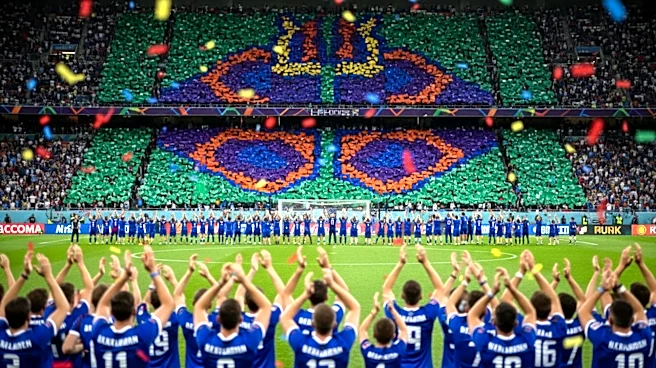
If you’ve seen a massive, coordinated image or message unfold across an entire fan section, you’ve witnessed a tifo. The word comes from the Italian tifosi, meaning fans, a term itself derived from the idea of being “feverish” with passion. These elaborate displays, which can be giant painted banners or mosaics made of thousands of individual cards, originated with Italian and Eastern European “ultra” supporter groups in the 1960s and 70s. Tifos are far more than just decoration; they are a form of communication used to celebrate club history, intimidate rivals, or even make political statements. Requiring immense planning, funding, and coordination, they are a testament to a fanbase’s devotion and creativity.
The Viking Clap
Made famous by Iceland's tiny but mighty national team during their improbable run at the UEFA Euro 2016 tournament, the Viking Clap is a mesmerizing ritual. Fans and players unite in a slow, rhythmic clap accompanied by a guttural “Huh!” that gradually accelerates, creating an intimidating and awe-inspiring sound. Despite its name, the tradition has no connection to ancient Vikings. Its modern roots are traced to fans of Scottish club Motherwell, who inspired an Icelandic club's supporters in 2014. Iceland’s success on the international stage launched the clap into global fame, and it has since been adopted by teams and fans worldwide, from the NFL's Minnesota Vikings (who chant "Skol!") to supporters in India.
The Poznań
It might look like the ultimate sign of disrespect, but when thousands of fans turn their backs to the field, link arms, and start jumping in unison, it’s actually a unique form of celebration. This is “The Poznań,” named after Polish club Lech Poznań, whose fans are credited with creating it. It first gained international attention in 2010 when Lech Poznań played Manchester City, and City's fans quickly adopted the tradition as their own. The act can be both a taunt—suggesting their team is so dominant they don't even need to watch—and a powerful display of communal joy. Originally, it may have even started as a form of protest against club management while still showing support for the players.
The Wave (or La Ola)
Perhaps the most recognizable stadium tradition in all of sports, the Wave is a simple concept with a surprisingly contentious origin story. While many around the globe know it as the “Mexican Wave” or La Ola after it exploded in popularity during the 1986 World Cup in Mexico, its roots are in North America. Professional cheerleader “Krazy” George Henderson claims to have orchestrated the first one at an Oakland A's baseball game in October 1981, and there is video to prove it. However, the University of Washington claims to have debuted it at a football game the same month. Regardless of who started it, the effect is universal: a ripple of human motion that brings a sense of playful unity to tens of thousands of strangers.
Country-Specific Chants
While some traditions cross borders, every nation has its own songbook. These aren't just simple cheers; they are complex songs, often adapting melodies from pop hits or folk tunes, with lyrics about glory, rivalry, and national pride. Argentina's fans are so influential that their chanting style has been exported and adapted by countries like Japan. England's supporters might belt out Oasis's "Wonderwall" after a victory, while the American Outlaws, a U.S. supporters' group, are known for their signature chant, “I Believe That We Will Win!”. Listening to these anthems provides a direct window into the unique cultural identity of each fanbase.