





An Epic No-Win Scenario
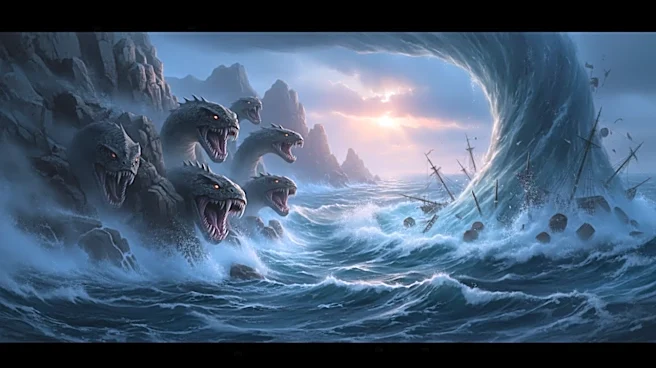
The phrase comes directly from Homer's epic poem, The Odyssey. After surviving sirens and other supernatural threats, the Greek hero Odysseus has to navigate a narrow strait to get home. On one side looms Scylla, a monstrous, six-headed beast living in a cliffside
cave, who snatches sailors from passing ships. On the other side is Charybdis, a sea monster that acts as a colossal whirlpool, swallowing and spitting out the sea three times a day, capable of destroying an entire vessel. The two monsters are so close that avoiding one means sailing directly into the other's path. The goddess Circe advises Odysseus that sailing closer to Scylla is the 'lesser of two evils'; he would lose six men—one for each head—but save his ship and the rest of his crew from the total destruction of Charybdis. Odysseus follows the advice, and Scylla horrifically plucks six of his best men from the deck as the ship passes.
The Brutal Meaning Behind the Myth
To be caught 'between Scylla and Charybdis' means to be in a situation where you must choose between two equally perilous alternatives. It's not just a difficult choice; it’s a dilemma where any path forward results in a significant, unavoidable loss. In Odysseus's case, the choice wasn't between good and bad, but between a guaranteed, quantifiable loss (six men) and a potential, catastrophic one (the whole ship). This story became a powerful metaphor for any high-stakes decision where all available options are fundamentally bad, forcing a leader to navigate an impossible path and accept the consequences. Some scholars believe the myth was a way for ancient sailors to personify the very real dangers of the Strait of Messina, the narrow passage between Sicily and mainland Italy known for its treacherous rocks and whirlpools.
More Than Just 'A Rock and a Hard Place'
So why not just stick with the simpler, more common idiom, 'between a rock and a hard place'? While they convey a similar meaning, 'between Scylla and Charybdis' carries a different weight. The modern phrase implies a static, immovable problem. The Greek version, however, is dynamic and violent; it involves two active, monstrous threats. Using it signals a higher level of drama and stakes. It's an erudite way of framing a problem, suggesting a dilemma of epic proportions with a rich literary and historical backstory. Pulling out 'Scylla and Charybdis' in a conversation or an article is a way of saying, 'This isn't just a tough spot; this is a legendary, soul-crushing choice with no clean outcome.'
Where the Phrase Survives Today
The phrase's dramatic flair has ensured its survival for millennia. Political commentators use it to describe leaders navigating between conflicting ideologies or disastrous policy options. A 19th-century cartoon, for example, depicted British Prime Minister Lord Palmerston steering the ship of state between Abraham Lincoln and Jefferson Davis during the American Civil War. In business, it can describe a CEO forced to choose between massive layoffs and bankruptcy. The idiom has also appeared in literature from Victor Hugo's Les Misérables to James Joyce's Ulysses, and even in pop music, with the band The Police using it in their 1983 hit “Wrapped Around Your Finger” to describe a toxic relationship. This staying power comes from the story's raw, universal truth: some choices are not about winning, but about choosing how you lose.