








Before July, There Was Jaws
You can't talk about summer blockbusters without mentioning Jaws. Released in June 1975, it single-handedly invented the modern blockbuster playbook. Before then, summer was considered a dead zone for movie theaters. But Steven Spielberg's thriller about a man-eating
shark scared audiences out of the water and into air-conditioned theaters in droves. It was the first movie to earn over $100 million and proved that a massive, nationwide release backed by heavy TV marketing during the summer could create an unprecedented cultural event. Two years later, Star Wars (a May release) built on this model, solidifying the summer as Hollywood’s prime season for big hits. While these films weren't released in July, they laid the essential groundwork, creating the very concept of a summer blockbuster that July would eventually come to dominate.
The '90s: High Concepts and Holiday Weekends
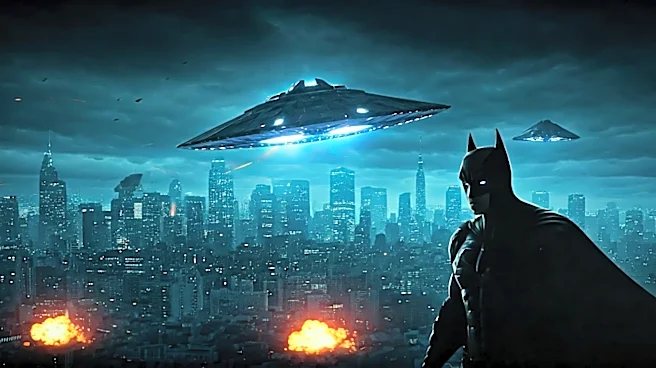
July's reign truly began to take shape in the 1990s. Studios realized the Fourth of July holiday weekend was a golden opportunity, with millions of Americans off work and looking for entertainment. The perfect test case arrived on July 3, 1991: Terminator 2: Judgment Day. An expensive, technologically groundbreaking sequel, it became the highest-grossing film of the year and proved a massive, action-packed spectacle could own the holiday. But the quintessential July blockbuster arrived in 1996. Independence Day, which literally built its plot and marketing around the holiday, was a turning point. Its high-concept pitch—aliens blow up landmarks, Will Smith punches one—was easily digestible, and its visual effects were on a scale never seen before. It became the highest-grossing film of 1996, cementing the idea that July was the perfect launchpad for loud, explosive, and hugely profitable event movies.
The Dark Knight Solidifies the Formula
If the '90s built the laboratory, the 2000s perfected the franchise experiments. The superhero boom was underway, but one film elevated the July blockbuster into a new stratosphere. Christopher Nolan’s The Dark Knight was released on July 18, 2008, and changed everything. It wasn't just a sequel; it was a serious crime drama that happened to feature Batman, and it received widespread critical acclaim. Anchored by Heath Ledger's posthumously Oscar-winning performance as the Joker, the film was a cultural phenomenon. It broke box office records, becoming the highest-grossing film of 2008 and proving that a July release could be both a commercial juggernaut and a legitimate awards contender. After The Dark Knight, a prime July slot became a signal of a studio's utmost confidence in a film's potential to be a four-quadrant, billion-dollar hit—the ideal breeding ground for a lasting franchise.
Today's Franchise Factory
Today, the strategy is fully transparent. Studios like Disney and Warner Bros. strategically position their most valuable assets—Marvel, DC, Jurassic World—for July releases. The month is no longer just for standalone hits but serves as a critical engine for building and sustaining interconnected cinematic universes. A July release is a statement: this isn't just a movie, it's an installment. The modern franchise model relies on creating reliable, repeatable events, and July, with its built-in holiday and guaranteed audience of students on break, is the most reliable window on the calendar. From Spider-Man: Far From Home to reboots of the Jurassic Park saga, the pattern is clear. The loud, explosive spectacle pioneered by films like Independence Day has evolved into a calculated, multi-billion dollar industrial process where July is the main production floor.