
The Challenge: Turning Tents into Terror
At its core, a Halloween Horror Nights house is a temporary installation, often built inside a cavernous soundstage or a glorified tent. The walls are meticulously decorated, but they’re still just flats of wood and foam. The challenge for the creative
team, led by figures like John Murdy and Mike Aiello, is to make these ephemeral spaces feel as solid, lived-in, and threatening as a real haunted mansion or an abandoned spaceship. This is where many home haunts and smaller attractions struggle; they fill a space with props, but it still feels like a decorated room. The magic of HHN lies in its ability to transcend the temporary nature of its construction. It achieves this not by throwing millions at every wall, but by mastering the art of illusion, with lighting as its most powerful tool.
Painting with Shadow, Not Just Light
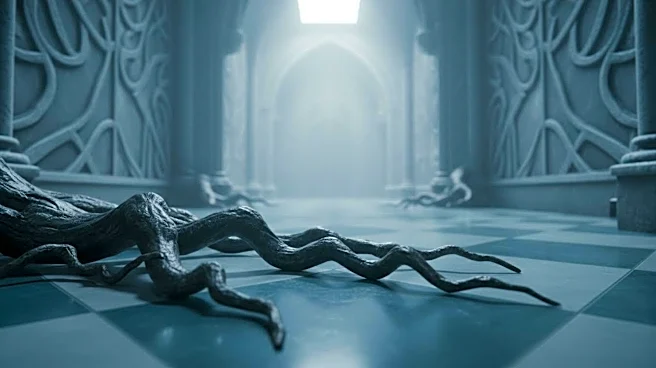
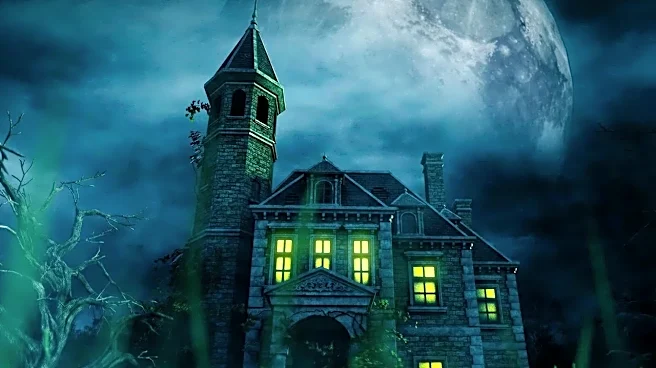
The central thesis of great horror lighting is simple: what you don’t see is infinitely scarier than what you do. Suspense is built from what you hide, not what you show. Instead of flooding a scene with light to show off every detailed prop, the best lighting designers “paint” with shadow. This is the power of contrast. By creating intense pockets of light against deep pools of darkness, they sculpt the environment. A single, harsh spotlight raking across a textured wall creates more drama than a dozen floodlights. A character half-hidden in shadow, with just their silhouette visible, is more menacing than one fully illuminated. This technique forces the guest’s imagination to fill in the terrifying blanks, a psychological trick that’s both effective and budget-friendly. It’s not about the cost of the fixture; it’s about the artistry of its placement.
The Psychology of a High-Contrast Haunt
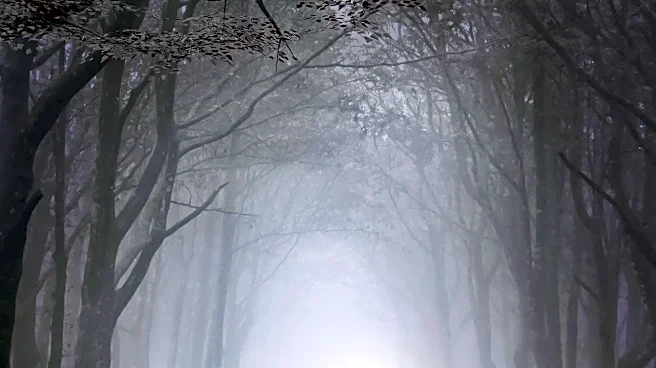
High-contrast lighting does more than just look spooky; it’s a form of psychological manipulation. First, it directs your focus. In a dark space, the human eye is naturally drawn to the brightest point, allowing designers to guide your attention exactly where they want it—and, more importantly, away from where they don’t. You’re looking at the flickering candle on the table, so you don’t notice the scareactor hiding in the darkness to your left. Second, it creates an illusion of depth. Layering light and shadow makes a short hallway feel endless and a small room feel vast and unknowable. Finally, it uses color to trigger emotional responses. Deep blues and purples can create a sense of cold, supernatural mystery, while sudden flashes of red signal immediate danger, a technique used in everything from classic horror films to modern stage productions.
The Horror Designer's Toolkit in Action
This theory comes to life through a series of specific, repeatable techniques. Uplighting, where a light is placed on the floor and aimed upward, creates unnatural, menacing shadows on figures and faces. Backlighting, placing a light behind an actor or prop, creates a stark silhouette that’s instantly iconic and intimidating. Pin-spotting uses a very narrow beam to highlight a single, crucial object—a bloody handprint, a creepy doll—making it feel impossibly important. Layering these techniques with washes of color and the ever-present fog, which catches and diffuses light beautifully, allows the team to build a cinematic world. It’s a delicate balance; a lighting designer must consider the story, the operational needs of moving guests through, and the precise timing of scares. It’s a technical and artistic process that is core to the haunt from the very beginning of its design.