







The Routine Everyone Knows
Ask any comedy fan to name a classic George Carlin bit, and chances are they’ll bring up “A Place for My Stuff.” First appearing on his 1981 album and HBO special *Carlin at Carnegie*, the routine is a masterclass in observational humor that spirals into
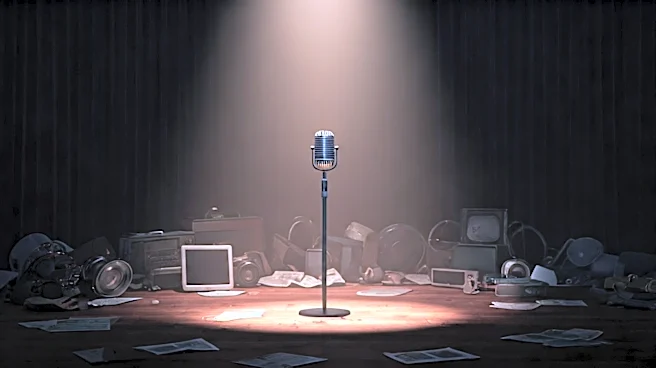
a profound commentary on human existence. Carlin deconstructs our lifelong obsession with accumulating possessions, noting that a house is just “a place to keep your stuff while you go out and get more stuff.” [14] The bit follows the fractal logic of our anxieties, from packing for a vacation (“a smaller version of your stuff”) to the even smaller pile of essentials you bring to a friend’s house for the night. [11] It’s a concept so universal that the phrase itself has become a cultural touchstone, even lending its name to a GRAMMY Museum exhibit about his legacy. [13]
The Obvious Brilliance
On the surface, the genius of the “Stuff” routine is plain to see. It’s a hilarious and deeply relatable critique of consumerism. Carlin zeroes in on the absurdity of our attachment to material objects and the territorial psychology behind it. He famously observes the subtle distinction we all make: “Their stuff is shit, and your shit is stuff.” [10] This line perfectly captures the irrational pride we take in our own junk. Carlin, a master linguist, was fascinated by the way we use words to create our reality. [15] The routine exposes how our language around possessions—my stuff, your stuff, a place for my stuff—reveals a fundamental need to carve out a small, manageable space in a chaotic world. It’s funny because it’s true, hitting on a universal human truth with devastating accuracy.
The Real Joke Hiding in Plain Sight
But the surface-level analysis, as brilliant as it is, misses the deeper, structural gag that makes the routine a work of genius. The hidden joke is that the routine *itself* is a place for George Carlin’s stuff. For Carlin, his “stuff” wasn’t furniture or trinkets; it was ideas, observations, premises, and meticulously crafted words. He was a notorious perfectionist and an obsessive archivist of his own thoughts. His daughter, Kelly Carlin, has spoken about being the keeper of her father’s extensive archives—literally, his stuff. [13] Carlin would spend years honing his material, testing and refining every single word until it was perfect. [6] Think about what the “Stuff” routine is: a perfectly organized, meticulously structured, and carefully curated collection of thoughts about disorganization and accumulation. He built a perfect container for his ideas about our imperfect containers.
A Meta-Masterpiece
This meta-joke elevates the bit from great comedy to philosophical art. Carlin, the man on stage mocking our need to collect and organize things, is simultaneously demonstrating his own mastery of collecting and organizing thoughts. The very act of performing the piece—of presenting his intellectual “stuff” to the audience in a neat, 10-minute package—is the ultimate punchline. He’s not just talking about having a place for his stuff; he’s *showing* us his. The stage is his house, the routine is the furniture, and the audience is invited in to admire his collection. This self-awareness was a hallmark of Carlin's later work, where he increasingly saw himself as an outsider dissecting the curious behavior of the human species. [7] The joke wasn't just on us and our meaningless possessions; it was also on him, the comedian who made a living by accumulating and arranging words with the same fervor we apply to our physical junk.