







When you think of holiday horror, your mind probably jumps to Christmas ghosts or Halloween slashers. But the genre's most overlooked holiday—Thanksgiving—might just be its most fertile ground for terror, making it worthy of its own subgenre.
More Than Just a Calendar Gimmick
Let’s be
clear: a horror movie simply set on or around the fourth Thursday in November isn't automatically 'Thanksgiving Horror'. While Halloween and Christmas horror often play with established mythologies like masked killers or evil spirits, Thanksgiving horror taps into a far more specific and uncomfortable set of American anxieties. It’s a subgenre built on the chilling contrast between the holiday’s wholesome image—gratitude, family, and abundance—and the simmering tensions just beneath the surface. The horror stems not just from an external threat, but from the very traditions the holiday is meant to celebrate. It weaponizes the forced cheerfulness and mandatory family togetherness, turning a Norman Rockwell painting into a scene of dread.
A Feast of Resentment and Anxiety
At its core, Thanksgiving is a pressure cooker. For many, the holiday is an annual exercise in emotional endurance where old arguments resurface and intrusive questions are passed around like side dishes. This is the thematic sweet spot for Thanksgiving horror. Films like 'Blood Rage' (1987) corrupt the traditional family gathering by unleashing an evil twin on a killing spree, reminding us that the people we're closest to can sometimes cause the most harm. Even movies that aren't strictly slashers, like 'The Oath' (2018), tap into this by escalating political paranoia at the dinner table into a psychological thriller. These films understand that the scariest things aren't always monsters, but the dysfunction we're expected to ignore for the sake of a peaceful meal.
The Dark Meat: History and Consumerism
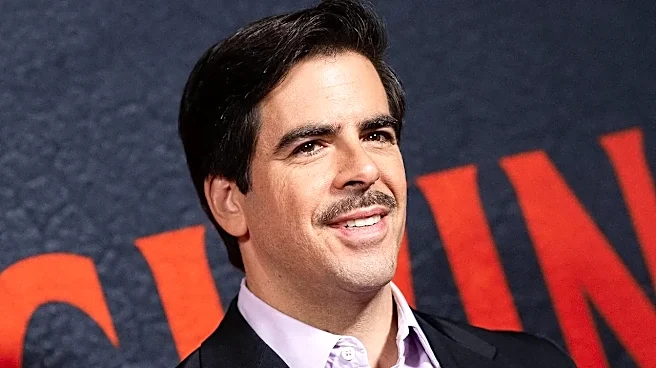
Thanksgiving horror also has the unique potential to grapple with the holiday's darker undertones. While many films sidestep it, the sanitized origin story of Pilgrims and Native Americans offers a fraught historical backdrop. Hulu's 'Pilgrim' (2019) leans into this by having historical reenactors take their roles with terrifying seriousness, exposing the horror in the performance of history itself. More recently, Eli Roth’s 'Thanksgiving' (2023) tackled a modern darkness: rabid consumerism. The film's inciting incident is a Black Friday riot, transforming the holiday of gratitude into a bloody spectacle of greed. This critique of capitalism, where a killer punishes the greedy, provides a thematic depth that separates these films from a simple holiday slasher.
The Canon of Carnage
The subgenre, though small, has a clear spectrum. On one end, you have the high-concept slashers. Eli Roth’s 'Thanksgiving' serves as the subgenre's modern flagship, a slick, gory whodunit with a Pilgrim-masked killer. Then there's 'Kristy' (2014), an intense and underrated thriller about a college student stalked on a deserted campus during Thanksgiving break, highlighting themes of isolation and vulnerability. On the other, campier end sits 'ThanksKilling' (2008), a low-budget cult classic about a murderous turkey that, despite its schlock, is a staple of the category. Even found-footage films like 'Alien Abduction: Incident in Lake County' use the holiday gathering as a believable reason to keep the camera rolling as terror unfolds. Together, these films prove the category's versatility, from psychological dread to bloody fun.