








The Public Service Announcement Trap
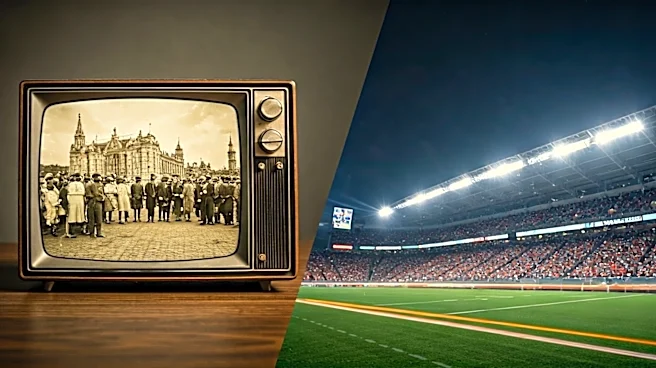
We’ve all seen it: the well-intentioned but stiff TV special. It arrives with a sense of obligation, packed with somber voiceovers, slow-panning historical photos, and an overall tone that feels more educational than emotional. This is the Public Service
Announcement (PSA) trap. When covering topics of deep historical and social importance, from Black History Month to Pride, it’s easy for networks to create content that checks a box but fails to connect. The information is valuable, but the presentation feels like a lecture. It speaks *at* you, not *with* you. For Juneteenth—a holiday commemorating the end of slavery in the United States—the risk is even greater. The day holds profound pain, generational trauma, and the weight of a promise deferred. But it is also, crucially, a celebration of freedom, resilience, and Black culture. A special that leans too heavily on solemnity misses the joy. One that’s all celebration without context feels shallow. The magic happens in the edit, where producers and editors craft a rhythm that honors both.
Juxtaposing Joy and Gravitas
The most successful Juneteenth specials, like CNN’s “Juneteenth: A Global Celebration for Freedom” or ABC’s “Soul of a Nation” presentations, operate on a principle of dynamic contrast. The editing doesn't just present information chronologically; it weaves it together thematically. A high-energy performance from a modern artist like Chlöe or Questlove might be immediately followed by a short, poignant segment on the history of Galveston, Texas. A triumphant gospel choir anthem might fade into a quiet, reflective interview with a community elder.
This isn't random channel-surfing. It’s a deliberate pacing choice. The energetic moments create emotional buy-in, drawing the viewer in with the universal language of music and performance. Once you’re engaged and feeling the celebratory energy, the program can pivot to the more sobering historical context. This rhythm prevents emotional fatigue. Instead of a monotonous tone, the viewer experiences a spectrum of feeling—joy, reflection, pride, sorrow—that mirrors the complexity of the holiday itself. The edit creates a conversation between the past and present, showing how one informs the other in real time.
Pacing Through Personal Stories
Another key to avoiding the PSA feel is the focus on intimate, personal narratives over broad, academic history. While experts and historians are essential, the emotional core often comes from first-person or family accounts. Editors will build segments around a single person’s journey or a family’s multi-generational story, using their words as the narrative spine.
Instead of a narrator explaining the significance of a historic site, we watch someone walk through it, sharing what it means to their own lineage. This approach transforms abstract history into a tangible, human experience. The editing in these moments often slows down. It holds on a person’s face as they react. It uses archival photos not as generic B-roll but as illustrations for a story being told by a direct descendant. This micro-focus makes the macro history feel immediate and personal. It’s the difference between reading a textbook chapter on emancipation and hearing a story from Opal Lee, the “Grandmother of Juneteenth,” herself. The latter has an undeniable, unscripted power that no formal narration can replicate.
Soundtracking a Movement
Finally, the sonic landscape of these specials is meticulously curated. The “editing rhythm” is quite literally a rhythm. Music isn’t just background filler; it’s a primary storytelling tool. The soundtrack often spans the entire breadth of Black American music, moving seamlessly from spirituals and blues to jazz, R&B, and hip-hop. This isn't just a playlist; it's an auditory timeline of resilience and innovation.
Editors use music to bridge disparate segments. A driving hip-hop beat can create momentum, carrying the viewer through a quick-cut montage of celebrations across the country. A soulful ballad can provide a moment for emotional reflection after a difficult historical segment. The music becomes the emotional glue holding the special together, ensuring the tone shifts are smooth rather than jarring. It reinforces the central theme: that the story of freedom is not a static event from 1865 but a continuous, living, and evolving song.