
What Is 'Cost-Per-Wear,' Anyway?
Before we get into fabrics and zippers, let's break down the key concept: cost-per-wear, or CPW. It’s a simple formula that savvy shoppers use to determine the true value of an item: divide the total price
of a garment by the number of times you wear it. A $40 fast-fashion jacket you wear eight times before it pills or tears has a CPW of $5. Meanwhile, a $300 archival jacket you wear 150 times over a decade has a CPW of just $2. This calculation fundamentally reframes a purchase. It’s not about the initial sticker shock; it's about the long-term investment in your wardrobe. In a world dominated by the fleeting thrill of cheap clothing, thinking in terms of CPW is a quiet rebellion. It prioritizes durability and personal style over passing trends, arguing that buying one high-quality item is ultimately more economical—and sustainable—than cycling through a dozen poorly made ones.
The Rise of the Archival Track Jacket
So, why a track jacket? This sportswear staple is having a major moment, evolving from the playing field to the front row. The term "archival fashion" refers to significant pieces from a designer's past collections—garments valued for their historical and cultural importance, not just their age. Think of a specific, iconic track jacket from a brand’s 1990s collection, not just any old thrift-store find. The appeal lies in its authenticity and the story it tells. In 2026, as trends from the '80s and '90s continue their revival, these pieces represent a slice of history. Unlike a new item designed to look old, an archival piece is the real deal. This search for authenticity is a direct response to the mass-produced, disposable nature of modern fashion, making these jackets a statement of knowledge and personal taste.
A Textile-Nerd's Guide to What Lasts
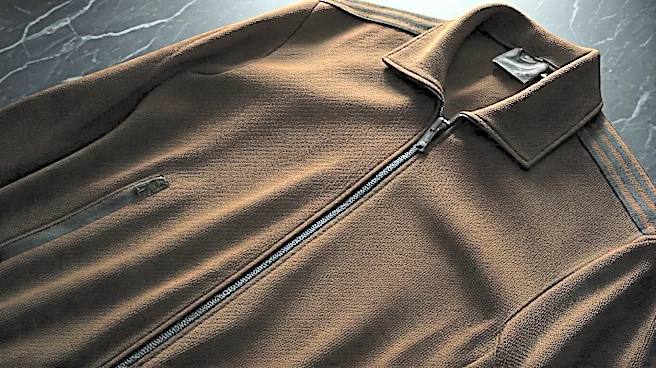
Here’s where we get into the nitty-gritty. What makes a vintage track jacket outlast its modern, cheaper counterpart? It comes down to materials and construction. Many older jackets were made from high-density polyester or nylon blends designed for actual athletic performance, with a focus on durability. The fabric feels different—often more substantial and less prone to snagging. Contrast this with fast fashion, where the goal is to approximate a look for the lowest possible cost, often using flimsy, lightweight synthetics that quickly lose their shape. Look at the details: older jackets often feature robust, over-engineered metal zippers (think YKK), reinforced seams with double-stitching, and tightly woven cuffs and collars. Modern equivalents often cut corners with plastic zippers that jam, single-stitched seams that pucker and break, and elastic that gives out after a few washes. Vintage workwear and sportswear were often built to be tools, and that philosophy is evident in their construction.
Doing the Math on a Classic
Let’s apply this to a real-world scenario. You find a mint-condition archival track jacket for $250. The price feels steep. On the next rack is a trendy, modern knock-off for $50. It looks almost the same. The choice seems obvious, but let's use the CPW mindset. You wear the $50 jacket twice a month for one season (six months), totaling 12 wears before a seam splits or it starts looking tired. Its CPW is $4.17. Now, consider the $250 archival piece. Its timeless design and superior build mean you wear it just as often, but for five years straight. That’s 60 wears, bringing its CPW down to $4.17—the same as the cheap jacket. But the archival piece is likely still going strong. Wear it for another five years, and its CPW drops to just $2.08. The more you wear it, the more value you extract. The higher initial cost becomes negligible when amortized over a decade of use, proving that quality isn't expensive; it's economical.