






The Script We Wrote Ourselves
We can thank Hollywood for the massive expectation gap. From Close Encounters of the Third Kind to Independence Day, our cultural script for first contact is a singular, dramatic event. It’s a binary switch: one day we’re alone, the next we’re not. This
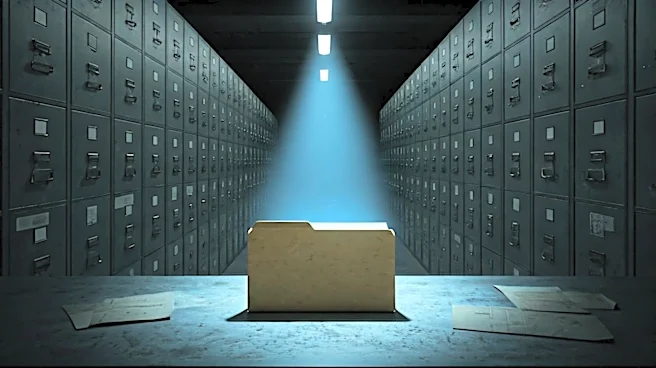
narrative is simple, emotionally satisfying, and completely at odds with how any government, especially our own, actually functions. The Pentagon and the intelligence community are not production studios aiming for a big reveal. They are risk-averse bureaucracies built on process, classification, and caution. The product they deliver isn’t a press conference; it’s a PDF. The 2021 preliminary assessment on Unidentified Aerial Phenomena (UAP) was a perfect example: a dry, nine-page document that confirmed many sightings were real and unexplained, but offered zero sensational conclusions. It was a shrug in official letterhead, a far cry from the awe-inspiring moment many had hoped for.
It’s Not a Cover-Up, It’s Just Boring
The most frustrating part of the modern UAP story isn’t a shadowy cabal hiding crashed saucers; it’s the sheer, grinding mundanity of the process. The government’s approach is to collect data, analyze it, and categorize it. The All-domain Anomaly Resolution Office (AARO) was established for this exact purpose. Its goal isn’t to prove the existence of extraterrestrial life, but to identify potential national security threats from advanced drones, foreign surveillance technology, or other terrestrial sources. Anything that doesn’t fit into those boxes is labeled “unresolved.” This is where the awe dies. For a scientist or an intelligence analyst, “unresolved” is a starting point for more work. For a public raised on alien invasion plots, it feels like a deliberate evasion. But the truth is, the rigorous, slow-moving scientific method is the only way to approach a topic this explosive. You don't get to skip the boring parts and jump to the stunning conclusion, no matter how much you want to.
The Burden of Extraordinary Proof
The famous maxim from Carl Sagan, “extraordinary claims require extraordinary evidence,” is the core of the issue. While whistleblower testimony, like that of former intelligence official David Grusch, provides tantalizing claims of recovered non-human craft and a decades-long cover-up, it remains just that: testimony. It is not, in the scientific or legal sense, proof. The government can’t simply hold a press conference based on one person’s account, no matter how credible they seem. To do so would be wildly irresponsible. Instead, those claims are fed back into the very machine they critique: congressional hearings, inspector general investigations, and classified briefings. Every piece of sensor data from a Navy jet, every pilot’s eyewitness account, and every explosive claim has to be vetted, cross-referenced, and deconflicted. Earning a sense of awe “the hard way” means building a case so airtight that it withstands scrutiny from scientists, politicians, and the public. That process takes years, not a news cycle.
Awe in the Accumulation
Perhaps we’re looking for awe in the wrong place. Maybe the watershed moment isn’t a single announcement but the slow, steady accumulation of credible information. For the first time, Congress is holding hearings, the military is encouraging pilots to report sightings, and NASA is applying its scientific muscle to the problem. The stigma that shrouded this topic for 75 years is finally evaporating. This is the real story. The shift from fringe conspiracy to legitimate national security and scientific inquiry is, in its own way, monumental. The awe isn’t in the answer; it’s in the fact that we’re finally allowing ourselves to ask the question in a serious, official capacity. The resulting data may not give us aliens on the White House lawn, but it might just give us a more accurate understanding of the world and our place in it. That kind of revelation is one you have to earn.