
So, What Is 'Packing'?
At its simplest, 'packing' is a metric that counts the number of opposition players a player bypasses with a successful pass or dribble. Think of it this way: when a midfielder in their own half threads
a perfect pass forward to a striker, they might take the entire opposing midfield out of the play. If six opponents are now behind the ball, that pass has 'packed' six players. Both the passer and the receiver get credit for the action. The idea was developed by two former German professional players, Stefan Reinartz and Jens Hegeler, who felt that traditional stats like possession percentage didn't capture a player's true effectiveness at breaking down a defense. They wanted a way to quantify the value of a single, line-breaking action.
How It's Measured and Why It Matters
Unlike 'Expected Goals' (xG), which measures the quality of a shot, packing measures the quality of ball progression. It’s not about how long you have the ball, but what you do with it. A team can have 70% possession, but if it’s all sideways passes between defenders that don't bypass anyone, their packing rate will be low. Conversely, a team playing on the counter-attack might have little possession but a very high packing rate if each pass forward eliminates multiple defenders. Analysts track both the total number of opponents 'packed' and, more specifically, the number of defenders packed. Taking defenders out of the equation is considered especially valuable because it has a stronger correlation with creating goal-scoring opportunities. Essentially, it’s a number that shows which players and teams are most effective at moving the ball into dangerous areas and dismantling an opponent's defensive shape.
Beyond Possession: Why 'Packing' Is In
For years, soccer analytics were dominated by xG and possession stats. But coaches and analysts realized those numbers didn't tell the whole story. A team could lose the possession battle but win the game convincingly, leaving stat sheets looking baffling. Packing provides the 'why'. It gives credit to the deep-lying midfielders who start attacks, the defenders who step up and break lines with a pass, and the wingers who beat their man one-on-one. These 'unsung heroes' of the stat sheet finally get their due. The term is exploding in popularity during the 2026 World Cup because the tournament's expanded format has led to more games where a tactical underdog needs to be ruthlessly efficient to beat a possession-dominant powerhouse. Packing is the language of that efficiency.
The 'Packing' Artists of the 2026 World Cup
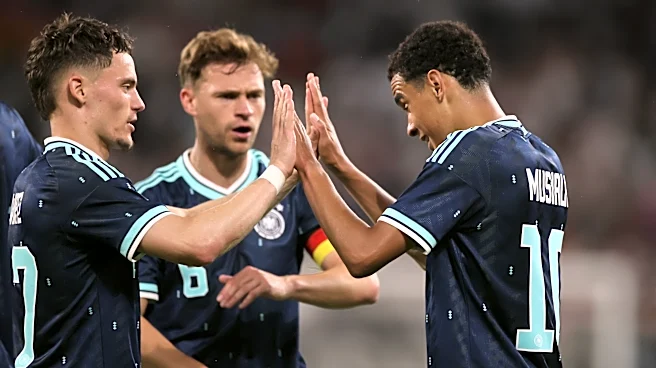
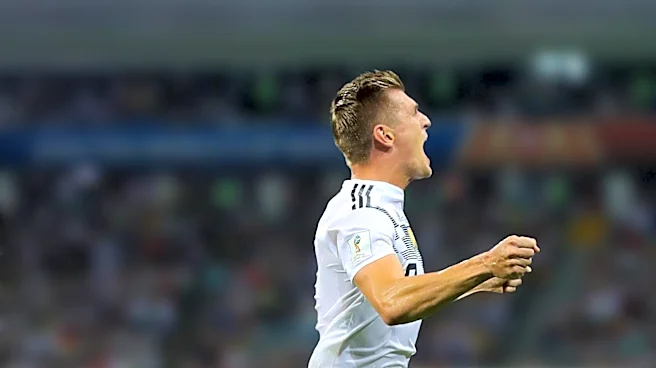
So, who should you watch? Historically, players like Germany’s Toni Kroos have been masters of packing from deep midfield, consistently bypassing entire lines of pressure with a single pass. In the modern game, look for players who receive the ball in tight spaces and immediately look to play forward. English midfielders like Declan Rice and German wunderkind Jamal Musiala often post high packing numbers through a combination of powerful dribbles and incisive passing. On the receiving end, forwards who are experts at finding pockets of space behind the defense—think players in the mold of a Kylian Mbappé or Erling Haaland—also drive up team packing scores by giving their teammates a target to hit. When you see a team absorb pressure and then suddenly spring a devastating attack, you're likely watching a masterclass in packing.