





From Safety Pins to Synthesizers
To understand New Wave's accessories, you have to start with what they were rebelling against: punk. By the late 1970s, punk fashion had a clear identity rooted in DIY anarchy. Its accessories were born of function and frustration—safety pins holding
ripped clothes together, leather and chains signifying a tougher, anti-establishment stance. The look was raw, often monochrome, and built from deconstruction. But as punk’s aggressive sound evolved into the more melodic, synth-driven beats of New Wave, the fashion followed. The nihilism of early punk gave way to a more artistic, sometimes ironic, sensibility. The scene needed a new visual language, and that meant the accessories couldn't just be a continuation of punk's gritty aesthetic; they had to be a statement of something new.
A Shot of Italian Espresso
The single biggest jolt to the system came not from London or New York, but from Milan. In December 1980, a group of designers led by Ettore Sottsass, bored with the stuffy rules of modernism, formed the Memphis Group. Their mission was to inject fun, color, and chaos into design. Their furniture was a riot of clashing colors, asymmetrical shapes, and cheap materials like plastic laminate, described as a "shotgun wedding between Bauhaus and Fisher-Price." Though focused on interiors, their influence was immediate and seismic. The media loved their cartoonish, irreverent style, which perfectly aligned with the emerging New Wave culture. Fashion designers, and soon the high-street, absorbed this new aesthetic, translating it into wearable art. That explosion of color and playful geometry you see in New Wave jewelry is a direct echo of the Memphis movement's radical vision.
Plastic, Fantastic, and Mass-Produced
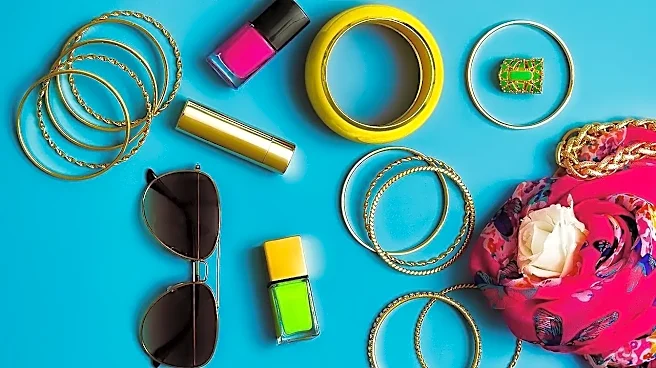
While punk championed the DIY modification of existing items, New Wave gleefully embraced the cheap, cheerful, and synthetic. Plastic and acrylic became hero materials, allowing for big, bold, and lightweight pieces that were affordable and available in every color imaginable. Think stacks of colorful jelly bracelets, oversized plastic hoops, and novelty brooches in whimsical shapes. This was a major philosophical shift. Instead of repurposing symbols of economic hardship like safety pins, New Wave celebrated the accessibility of mass-produced consumer goods. It was less about authentic grit and more about curating a fun, artificial, and highly stylized identity. This use of new, inexpensive materials enabled designers to experiment with sculptural, oversized forms that would have been too heavy or costly in traditional metals.
The Androgynous Influence
The aesthetic of New Wave was also shaped by its icons, many of whom challenged traditional gender expression. Artists like Annie Lennox, Boy George, and Grace Jones played with androgyny, using fashion and makeup to create artistic personas that weren't strictly masculine or feminine. Accessories were key to this. They weren't just decorative; they were transformative. This gender-bending attitude meant accessories became less about traditional adornment and more about bold self-expression. The focus shifted to graphic shapes, abstract patterns, and a general sense of artistry that could be worn by anyone, moving fashion further away from the more traditionally aggressive masculine energy of early punk. The result was a look that was less about rebellion and more about reinvention.