





Dropped Right into the Action
The fastest way to kill suspense is to explain it. This October, shows are embracing the age-old 'in medias res' technique, Latin for 'into the midst of things'. Rather than a slow on-ramp, viewers are thrown directly into a pivotal moment, forced to play
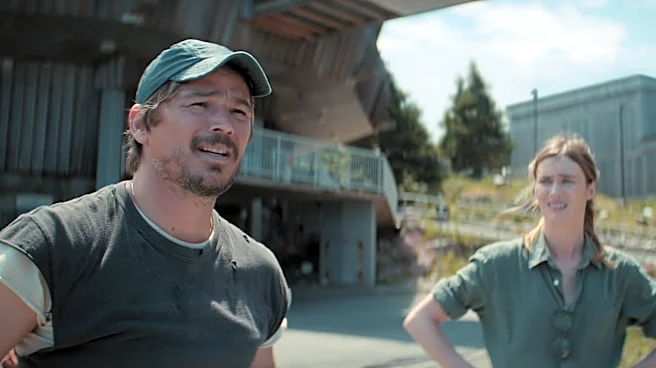
catch-up. Take the new Netflix thriller 'Below,' which has quickly climbed the streaming charts. The series opens not with an explanation of the sea creature terrorizing a small Newfoundland town, but with Josh Hartnett’s character in a frantic fight for survival against it. We don't know the monster's origin or the town's full history. We only know what matters in that second: the immediate, life-of-death stakes. The 'why' and 'how' are peeled back in later episodes, but the initial hook is pure, context-free conflict. This method respects the viewer's intelligence, trusting that they can assemble the puzzle pieces without having their hand held.
Letting the World Tell the Story
Great science fiction understands that a setting is more than a backdrop; it’s a character. Instead of having a character announce, 'We live in a grim, technologically decayed society,' a show can communicate that through visual cues. Costumes, set design, and even the way characters interact with their environment can convey volumes of information. The upcoming 'Blade Runner 2099' appears poised to continue this tradition, with trailers hinting at a world told through its rain-slicked, neon-drenched aesthetic. Similarly, the second season of 'Cyberpunk: Edgerunners' promises to immerse viewers in the culture of Night City, where body modification and corporate warfare are just part of the landscape. The story isn't explained through dialogue; it’s absorbed through the grime on the walls, the flicker of a holographic ad, and the weariness in a character's eyes. It’s a powerful, passive form of world-building that makes the universe feel lived-in and authentic.
Revelation Through Personal Conflict
Sometimes the best way to understand a universe is to understand one person’s place in it. The lore becomes secondary to a character's immediate, personal goals. The highly anticipated Disney+ series 'VisionQuest' is setting itself up to do just that. Following the events of 'WandaVision,' the series finds a reconstructed Vision grappling with his identity and memories. The show's central questions—'What is consciousness?' and 'What makes a person whole?'—are grand, philosophical sci-fi themes. Yet, they are filtered entirely through Vision's personal journey. Audiences won't need a lecture on synthezoid history; they will learn what it means to be Vision by watching him try to figure it out himself. This character-first approach makes the stakes feel intimate and urgent, ensuring that even the most high-concept ideas are grounded in relatable human (or android) emotion.