







The Anatomy of a Red Carpet Detail
The guards flanking celebrities at the Cannes Film Festival are not your average event security. Forget bulky bouncers with earpieces; these are highly trained, often multilingual operatives drawn from elite private security firms, and sometimes even from the ranks of former special forces or intelligence agencies. Their job is a delicate paradox: be an intimidating, visible deterrent to any would-be thieves, yet melt into the background so as not to disrupt the fantasy of effortless glamour. They are responsible for what the luxury industry calls “asset protection,” and the asset in question—a single diamond necklace or a pair of emerald earrings—can be worth more than the entire production budget of a film premiering that night. Their focus
is absolute. While the world watches the star, they watch the world, scanning the crowds, the rooftops, and the periphery for any sign of a threat. Every smile from a fan, every outstretched hand, is assessed in a fraction of a second.
The $2 Million Hand-Off
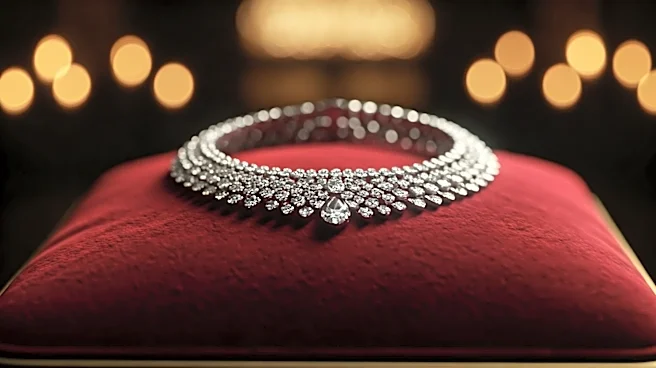
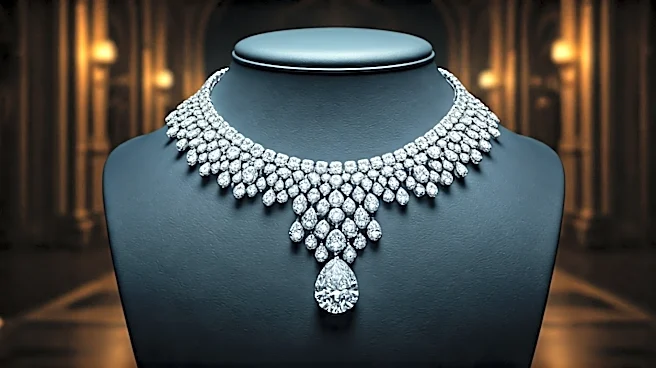
How does a $2 million necklace get from a vault in Geneva to an actress’s neck on the French Riviera? It’s a process of military-grade logistical precision. High-end jewelers like Chopard, the official partner of the festival, don't just mail these pieces. The journey begins with impenetrable insurance policies and armored transport. Upon arrival in Cannes, the jewels are often stored in hidden, state-of-the-art safes inside hotel suites—safes that are sometimes installed specifically for the festival. When a celebrity is selected to wear a piece, a security team oversees the “loan.” They document everything. The hand-off is a brief, tense ceremony. From that moment until the piece is safely returned, a dedicated security detail is assigned to the jewelry as much as to the star. They shadow the celebrity from hotel to car, from car to carpet, and from after-party back to the hotel, their entire focus on the glittering asset.
When Glamour Meets Grand Larceny
This level of security isn't paranoia; it's a direct response to history. The Côte d'Azur has long been a hunting ground for sophisticated jewel thieves. The most infamous incident occurred right at Cannes in 2013, when jewels from Chopard, valued at over $1 million, were stolen from a safe in a Novotel hotel room during the festival. The brazen theft, which occurred while a Chopard employee was in the room, sent shockwaves through the industry. Authorities have often linked such heists to the 'Pink Panthers,' a notorious international network of jewel thieves known for their meticulous planning and audacious execution. These groups see the festival not as a celebration of cinema, but as a glittering buffet of opportunity. This context transforms the stoic guards from party accessories into the front line of a very real, very high-stakes battle against organized crime.
The Art of Invisible Protection
The most effective security is the security you never see. Beyond the tuxedoed men standing guard, a complex web of protection is at play. Plainclothes officers mingle with the paparazzi and fans, their eyes trained for suspicious behavior. Command centers, often located in nearby hotels, monitor CCTV feeds from every conceivable angle. Routes to and from the Palais des Festivals are pre-screened, and sometimes decoy vehicles are used to throw off anyone who might be tailing a star. The security detail operates on a 'secure bubble' principle. The goal is to create a perimeter around the celebrity that is both flexible and unbreakable. The guards communicate via encrypted channels, using code words to describe movements and potential threats. It’s a silent, synchronized dance where the stakes are astronomically high. One misstep, one moment of distraction, could result in a devastating financial and reputational loss for the jeweler, not to mention a terrifying experience for the celebrity.