








What does a Latin music playlist sound like in 2026? It’s not just one thing. It's a global conversation, and two artists, Rosalía and The Warning, perfectly capture its thrilling contradictions and expanding identity. They couldn't be more different.
Rosalía’s Flamenco Futurism
First, you have Rosalía, the Catalan artist who became a global phenomenon by treating tradition as a launchpad, not a cage. She began her career deeply embedded in flamenco, one of Spain's most complex and historic musical forms. But from her breakout album 'El Mal Querer', it was clear she wasn’t just preserving the past; she was building a future with it. The album, which started as her university thesis, deconstructs a 13th-century story of a woman held captive by a jealous lover, blending flamenco's raw vocal melismas with drum machines, pop structures, and industrial sounds. She masterfully fuses the foundational elements of flamenco—its unique rhythms and Phrygian mode—with R&B, hip-hop, and hyperpop aesthetics. Later works like 'Motomami' and the mythical 2025 album 'LUX' pushed even further, incorporating everything from bachata to jarring electronic textures, proving that her vision is relentlessly experimental. Rosalía doesn't just make Spanish music; she makes global music that is profoundly Spanish, rearranging pop's DNA in the process.
The Warning's Hard Rock Herencia
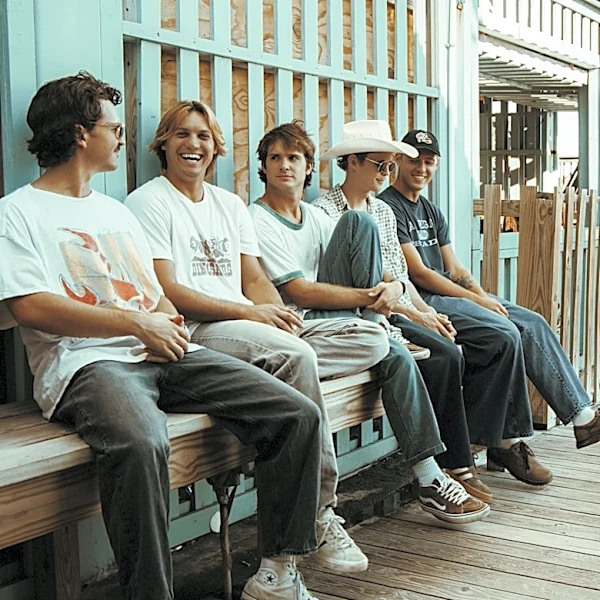
On the other end of the sonic spectrum are the Villarreal sisters from Monterrey, Mexico, who form the hard rock trio The Warning. Growing up playing the video game 'Rock Band' and listening to Metallica, Muse, and Queen, they became a viral sensation in 2014 with a cover of 'Enter Sandman' recorded in their family's Sunday best. That moment jump-started a career built on unapologetic, guitar-driven rock. With a sound more aligned with Foo Fighters or Royal Blood than what many might stereotype as 'Latin rock,' they prove that geography doesn't dictate genre. By 2026, their success is undeniable, with their single 'Kerosene' having topped the Billboard Mainstream Rock Airplay chart—a first for an all-female Mexican band. While they sing in both English and Spanish, their identity isn’t a fusion of rock with traditional Mexican genres. Instead, they represent a different kind of cultural assertion: a world-class rock band that just happens to be from Mexico. They aren't blending into the Latin music landscape; they are expanding its borders by sheer force of will (and amplifier feedback).
A Playlist That Breaks the Categories
So, how do these two acts end up on the same playlist? Because they represent the magnificent identity crisis at the heart of modern Latin music. The term 'Latin' is increasingly a cultural and geographical signifier, not a sonic monolith. It’s a space where a Spanish experimentalist channeling flamenco and a Mexican hard rock trio can coexist, both pushing boundaries in parallel. This creates a fascinating challenge for institutions like the Latin Recording Academy. For years, the Latin Grammys have faced criticism over how they define and categorize music, from debates over the term 'urbano' to accusations of overlooking certain genres and regions. The Academy has made efforts to evolve, adding categories for electronic music, songwriting, and specific regional sounds to better reflect the industry's diversity. But artists like Rosalía and The Warning defy easy categorization. Is 'El Mal Querer' a pop album or a flamenco album? Is The Warning's Spanish-language anthem 'Ego' a 'Latin Rock' song, or just a rock song in Spanish? Their success highlights the limits of genre labels in an era of fluid creativity.