






Sicario (2015)
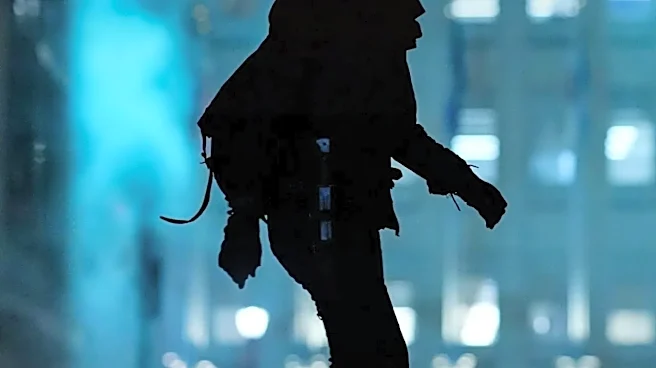
If there’s a modern film that feels like a direct spiritual successor to Bigelow’s work on 'Zero Dark Thirty,' it’s Denis Villeneuve’s 'Sicario.' The film follows an idealistic FBI agent, played by Emily Blunt, who is thrown into the murky, morally compromised
world of the war on drugs. Like Bigelow’s protagonists, she is a competent professional navigating a brutal, male-dominated system where the lines between right and wrong are hopelessly blurred. Villeneuve crafts sequences of almost unbearable suspense, favoring procedural detail and sudden, explosive violence over flashy theatrics. The film’s atmosphere of dread and its examination of how institutions corrupt individuals feel deeply connected to the themes Bigelow has explored throughout her career. It’s a relentless, thought-provoking thriller that questions the cost of fighting monsters.
A Prophet (Un Prophète) (2009)
For a true cinematic discovery, look no further than Jacques Audiard’s French masterpiece, 'A Prophet'. This gripping prison drama follows a young Arab man, Malik, who is sentenced to six years in a brutal, faction-run prison. Alone and vulnerable, he is forced to carry out a hit for the ruling Corsican mob boss. What follows is a patient, meticulous, and utterly absorbing story of survival and transformation. The film shares Bigelow's almost documentary-like approach, immersing you completely in its environment. You learn the rules of this violent world as Malik does. It's a story about the complex education of a criminal, told with a grounded realism that avoids genre clichés and builds into a powerful epic that has drawn comparisons to 'The Godfather'.
Hell or High Water (2016)
While not an action film in the traditional sense, David Mackenzie's modern-day Western captures the spirit of Bigelow's early work like 'Near Dark.' It's a story about people on the fringes, pushed to extremes by circumstance. Two brothers, facing the foreclosure of their family ranch, go on a bank-robbing spree, targeting the very bank that holds their debt. The film is less about the heists themselves and more about the sun-bleached landscapes, the economic desperation, and the weary cat-and-mouse game between the robbers and an aging Texas Ranger. It has that same blend of genre cool and social commentary that defines Bigelow's best films, where the setting is as much a character as the people in it. It’s a slow-burn thriller with a deep sense of time and place.
Blue Ruin (2013)
Kathryn Bigelow excels at showing the unglamorous, terrifying reality of violence. Director Jeremy Saulnier takes that idea and makes it the entire focus of 'Blue Ruin.' This is a revenge thriller stripped of all Hollywood fantasy. The protagonist, Dwight, is a homeless man who learns his parents' killer is being released from prison. When he decides to seek vengeance, his actions are clumsy, terrifying, and brutally realistic. There are no slick gunfights or clever one-liners. Instead, the film is a masterclass in sustained, nail-biting suspense, showing how one act of violence spirals into an amateurish, bloody feud. It’s a brilliant deconstruction of the revenge genre that will leave you breathless, reminding you that real violence is awkward, messy, and horrifying.
Triple 9 (2016)
Often overlooked upon its release, John Hillcoat’s 'Triple 9' is a gritty, sprawling crime saga that belongs in the conversation. The film follows a crew of corrupt cops and ex-soldiers blackmailed by the Russian mob into pulling off a nearly impossible heist. To do it, they plan to trigger a '999'—the police code for an officer down—to draw attention away from their real target. The film is a labyrinth of moral decay, featuring a stunning ensemble cast including Casey Affleck, Chiwetel Ejiofor, and Woody Harrelson. What makes it feel like a Bigelow film are its muscular, expertly staged action sequences, particularly a chaotic highway shootout and a tense raid on a housing project. It's a dark, nihilistic, and intense thriller that deserves a second look.