





The Tactical Death Sentence
In a 38-game league season, a team can absorb playing with ten men. They might lose the battle but have plenty more games to win the war. In a World Cup knockout match, there is no tomorrow. Going down a player isn't just a disadvantage; it's often a tactical
apocalypse. The coach has to rip up the game plan, instantly shifting to a defensive posture to simply survive. Studies have shown a team's expected goals can plummet by up to 65% after a red card. The remaining ten players are forced to cover more ground, leading to quicker fatigue against an opponent that now has a numerical advantage across the entire field. It fundamentally warps the contest from a match between equals into a desperate siege.
The Knockout-Stage Cliff
The very structure of a tournament magnifies the punishment. A red card in a league game usually means a one-to-three game suspension, an inconvenience spread over a long season. A red card in the World Cup knockout stage is a cliff edge. Not only does it cripple your team for the remainder of that do-or-die match, but a suspension means a player could miss the one and only semifinal or final of their entire career. This was a major storyline during the 2026 World Cup, where a single sending-off could mean the end of a player's tournament, with all yellow cards having been wiped after the quarterfinals specifically to prevent accumulation from knocking players out of the final. The stakes are absolute, with no second chances.
A Villain Is Born
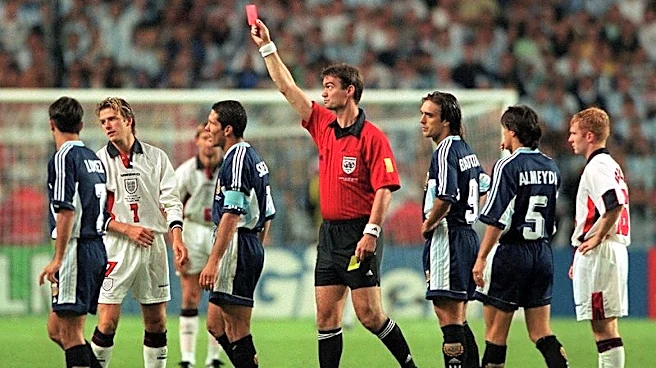
Major tournaments are narrative machines, and nothing creates a story faster than a red card. The global spotlight is so intense that a single mistake can define a player's career forever. Think of David Beckham's petulant flick against Argentina in 1998 or Zinedine Zidane's infamous headbutt in the 2006 final. These weren't just fouls; they became national traumas, endlessly replayed and analyzed, turning celebrated athletes into temporary (or permanent) villains. The player isn't just letting down their teammates; they are seen as letting down millions of fans back home. The media frenzy and public fallout create a level of personal drama and scrutiny that simply doesn't exist in a typical club match.
The Weight of a Nation
This leads to the final, intangible factor: pressure. Club soccer is a job; international soccer is a calling. These players are representing their entire country on the world's biggest stage. This immense psychological weight amplifies every action. A mistimed tackle isn't just a professional error; it's a moment that could crush the dreams of a nation. This pressure-cooker environment can lead to the very moments of madness or desperation that produce red cards in the first place. The emotional stakes for players and fans are at their absolute peak, transforming a simple disciplinary action into a moment of high drama and, potentially, historic heartbreak.