




An Enduring Symbol of Rebellion
Before they were a staple of early 2000s pop stars, low-slung pants were a symbol of counter-culture. The style first gained traction with the hip-huggers of the 1960s and 70s, worn by rock stars and their fans as a rejection of more restrictive, conservative
clothing. When British designer Alexander McQueen debuted his provocative “bumster” trousers in the 90s, he cemented the style’s rebellious edge, bringing it to the high-fashion runway. That spirit of defiance is the first key to their longevity. Each new generation that rediscovers the low-rise isn't just adopting a clothing item; they're tapping into a decades-old language of youthful rebellion. It's a way to push back against the styles that came before, whether it was the buttoned-up looks of the 50s or the high-waisted "mom jeans" that defined the 2010s.
The Y2K Nostalgia Machine
Of course, you can't talk about low-rise jeans without talking about the Y2K era. Pop icons like Britney Spears, Christina Aguilera, and Paris Hilton made the style ubiquitous. Their images—flaunting toned midriffs, often with a visible G-string or belly chain—are permanently etched into our cultural memory. In the internet age, these images are constantly recycled on social media mood boards and in throwback posts, creating a powerful and persistent nostalgia loop. For millennials who lived through it, the trend can be fraught with memories of toxic body standards. But for Gen Z, who were too young to experience it the first time, these images represent a kind of bold, unapologetic confidence that feels fresh and aspirational. This constant digital resurrection ensures the trend never truly dies; it just waits to be rediscovered.
Not A Replica, But An Evolution
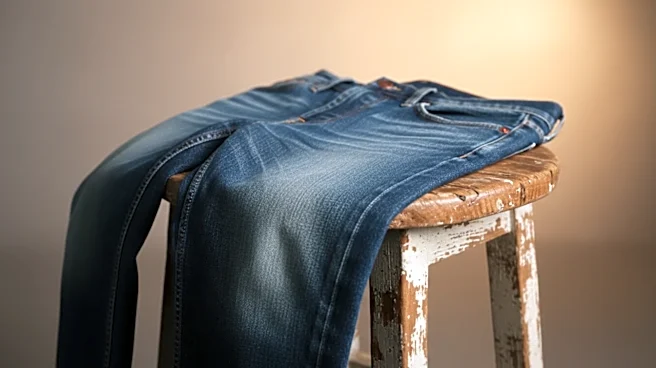
Crucially, the low-rise jean that keeps returning isn't an exact copy of its predecessor. While the ultra-low, skin-tight versions of 2003 still exist, the modern interpretation is often more relaxed and wearable. Today's popular low-rise styles are frequently baggier, with a slouchy fit that sits on the hips rather than clinging to them. This evolution is key to its survival. Designers have learned that while consumers enjoy nostalgia, they also demand comfort. By adapting the silhouette to be looser and easier to wear, the modern low-rise jean offers the rebellious Y2K attitude without the punishing fit. It’s styled differently, too—paired with elegant loafers or oversized layers for a more sophisticated look, proving it can be more versatile than its original iteration. This ability to adapt and reinvent itself for a new era is what allows it to outlast more rigid trends.
A Conversation About The Body
At its core, the low-rise silhouette has always been about the body. In the 2000s, it was often linked to a very specific, thin body type that dominated media. Its return has sparked a complex conversation. For some, it represents a slide back toward exclusionary beauty standards. For others, its revival in a more body-positive era is a chance to reclaim a controversial style. The new versions are being shown on a wider variety of body types, and the conversation around them is more nuanced. Unlike a simple color trend or a fleeting accessory, low-rise jeans force a discussion about confidence, exposure, and whose bodies are seen as fashionable. This inherent tension and cultural weight mean they are never just a piece of clothing; they are a statement, and statements have a much longer shelf life than simple trends.