




The Basic Anatomy of a Killer Pass
At its core, a through ball is a pass sent into the open space between and behind opposition defenders. Unlike a pass played directly to a teammate's feet, the through ball is played to where a teammate will be. For it to work, an attacking player must
make a forward run to meet the ball as it travels past the defensive line, all while staying onside. The pass can be a low, driven ball that skims across the grass, a lofted chip over the top, or a curled pass around a defender. In every variation, the goal is the same: to completely bypass the defensive structure and create a high-percentage scoring opportunity, often leaving the attacker one-on-one with the goalkeeper.
An Act of Geometric Warfare
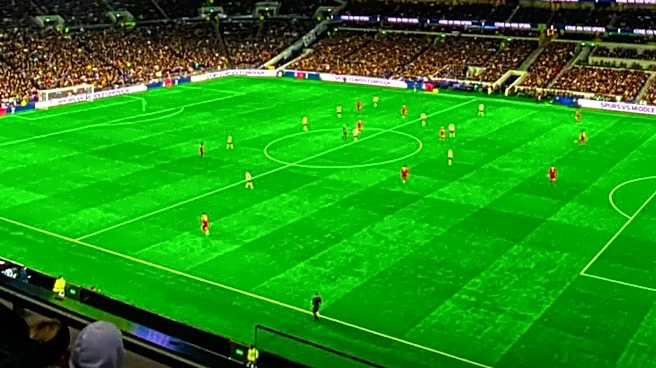
A successful through ball is a masterclass in exploiting geometry. Defenses are designed to stay compact, denying the space between players and between the defensive line and their own goal. The through ball attacks these gaps directly. It forces a rigid, organized defensive line into a state of chaos. Defenders who are holding a straight line to play an offside trap are suddenly forced to turn and sprint back towards their own goal, one of the most vulnerable positions for a defender. The pass changes the entire picture of the game in a split second, turning a stable defensive shape into a desperate footrace. This is particularly effective during a quick counter-attack, when a team that just lost possession has its players pushed forward and vast open space behind them.
The Unseen Language of Timing
The true genius of the through ball lies in its timing. It requires an almost telepathic understanding between the passer and the runner. The passer must have the vision to see the run developing before it happens and release the ball at the precise moment. A fraction of a second too early, and the runner won't have built up speed, allowing a defender to intercept. A fraction of a second too late, and the runner will be caught offside, or the defensive gap will have closed. The runner, in turn, must trust that the pass is coming and commit fully to their sprint, often starting before the ball is even kicked. This synchronization is the result of countless hours of training and developing on-field chemistry; it's what separates good offenses from truly great ones.
A Psychological Weapon
The through ball doesn't just break a team's tactical shape; it breaks their composure. For defenders, the sight of a ball rolling past them into open space for an onrushing attacker is a moment of pure panic. It forces instant, high-stakes decisions. Does the nearest defender follow the runner or try to intercept the pass? Do the other defenders drop back to cover or hold their line, hoping for an offside call? This split-second indecision is often all the attacker needs. Furthermore, the constant threat of a through ball forces a defensive line to play deeper, closer to their own goal, which in turn concedes more space in the midfield for the opposition to control the game. It’s a tactical threat that warps the entire defensive approach.
A Two-Player Masterpiece
Executing the play requires immense skill from two different players. The passer needs elite vision, awareness, and technical ability. They must scan the field, recognize the opportunity under pressure, and then deliver a pass with the perfect weight and accuracy to lead the runner into space without slowing them down. Think of the signature, defense-splitting passes of players like Kevin De Bruyne or Lionel Messi. The runner, meanwhile, needs intelligence, acceleration, and perfect timing. They must recognize when to start their run, often using a defender's blind spot to gain an advantage, and have the pace to get to the ball first. It's this combination of vision and movement, of pass and run, that makes the through ball one of the most beautiful and effective plays in the sport.