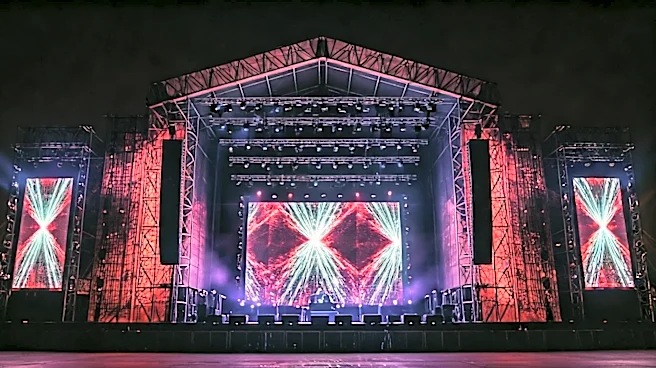








The Challenge: A Sea of Faces
The fundamental problem of a major music festival—think Coachella, Lollapalooza, or Bonnaroo—is one of scale. The sheer distance between the performer and the vast majority of the audience creates an emotional and physical gulf. For the artist, the crowd
can look like a blurry, anonymous mass. For the fan in the back, the performance can feel like watching a YouTube video on a distant phone screen. Bridging this gap is the number one job of a festival’s production team. Their goal is to shrink the space, not physically, but perceptually. They have to transform a sprawling field into something that feels, for just a few minutes at a time, like a private show.
The Core 'Trick': The Camera as an Instrument
The most powerful tool for creating this intimacy isn’t a smoke machine or a laser beam; it’s the camera. The giant screens flanking the stage, known in the industry as IMAG (Image Magnification), do more than just show you a bigger version of the artist. They are storytelling devices. A great live video director doesn't just plant a camera on the singer’s face and leave it there. They “play” the cameras like an instrument, orchestrating a visual narrative that mirrors the music’s emotional arc. The trick is in the shot selection. A wide shot establishes the epic scale, but an extreme close-up on the artist’s eyes during a quiet verse creates a profound sense of connection. A shot of their fingers on a guitar fret, a bead of sweat on their brow, or a fleeting, genuine smile—these are the details that collapse distance. You aren’t just watching a performance; you’re being invited into the artist’s personal space. This directed gaze makes you feel seen, even in a colossal crowd.
Painting with Light to Shrink the World
While the cameras handle the visual focus, the lighting designer’s job is to manipulate the audience's sense of space. A massive stage flooded with bright, undifferentiated light makes everything feel huge and impersonal. The real artistry comes from using contrast. During a thunderous, high-energy chorus, the lights might blast across the entire audience, unifying everyone in a single, shared moment of energy. But for an intimate ballad, a designer will do the opposite. They’ll kill the sweeping effects and use a single, soft spotlight to frame the artist. This simple act creates a “room” on stage, drawing the eye and focusing attention. It’s a visual cue to the brain: pay attention, this is important and personal. The darkness surrounding the artist becomes a frame, and for a moment, the other 79,999 people seem to fade away.
The Sonic Illusion of Closeness
Sound design completes the trifecta. Of course, the music has to be loud enough to reach the back, and technologies like delay towers (speaker arrays placed throughout the crowd) are crucial for ensuring the sound is in sync with the visuals. But intimacy can also be created in the mix. An audio engineer can subtly push the lead vocal forward, pulling back the roar of the guitars and drums for a key line. They can add a touch of reverb that mimics the acoustics of a smaller room, even in an open field. When a performer asks a massive crowd to sing along and the engineer pulls the band’s volume down, allowing the sound of thousands of voices to wash over the field, it creates a powerful feeling of communion. It’s a manufactured moment, but it leverages the crowd’s own energy to make a massive space feel like a unified, intimate choir.