








Artistry vs. Pragmatism
The stage in Johannesburg was set for a clash of philosophies. On one side stood Spain, the European champions whose mesmerizing “tiki-taka” style had hypnotized the world. They were artists, weaving intricate patterns with the ball. On the other was the Netherlands,
a nation with its own rich history of “Total Football,” a fluid, attacking style pioneered by the legendary Johan Cruyff. But this 2010 Dutch team had a different identity. Haunted by final defeats in 1974 and 1978, they arrived in South Africa with a hardened, win-at-all-costs mentality. Their strategy against Spain was clear from the outset: if you can't out-pass them, stop them from passing at all, by any means necessary.
The Kick Seen 'Round the World
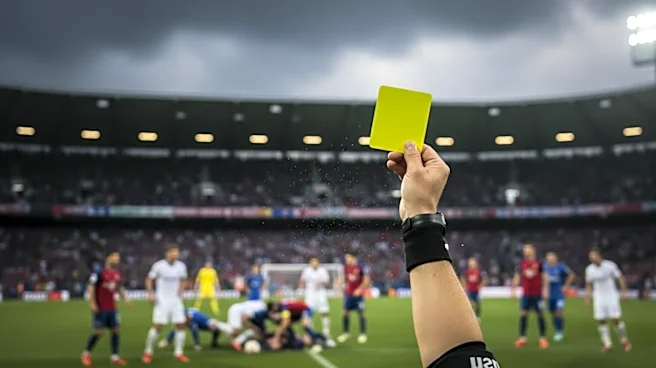
Just 28 minutes into the match, the Netherlands’ strategy manifested in its most brutal form. As a high ball dropped from the sky, Spanish midfielder Xabi Alonso cushioned it with his chest. Out of nowhere, Dutch midfielder Nigel de Jong launched himself into the air, not playing the ball but planting his studs directly into Alonso’s chest in a move that looked more at home in a martial arts film than a soccer final. Alonso crumpled to the ground in agony. It was a clear, undeniable red card offense. The world watched, stunned, waiting for the inevitable expulsion. Instead, English referee Howard Webb produced only a yellow card. In that moment, the tone for the most ill-disciplined final in World Cup history was set.
A Final Drowning in Yellow Cards
De Jong’s kick was the flashpoint, but the cynicism was relentless. The match devolved into a swamp of fouls, late tackles, and simmering aggression. By the end of the 120 minutes of play, Webb had issued a record-shattering 14 yellow cards and one red card (to Dutch defender John Heitinga for a second bookable offense). The previous record for a final was a mere six. The Dutch team was responsible for nine of the bookings, a clear indicator of their physical approach. The constant interruptions and outright hostility prompted dismay from neutrals and even condemnation from Dutch icon Johan Cruyff, who called his country's performance "dirty," "vulgar," and an exercise in "anti-football."
The Referee's Regret
Howard Webb, an elite referee at the peak of his career, found himself in an impossible situation. He later admitted his immense regret over the De Jong decision, stating plainly that it should have been a red card. Webb explained that his view of the point of impact was partially obstructed and that, only 25 minutes into a World Cup final, he was unwilling to make a decision based on a guess. While he stood by his on-field perception, he acknowledged that seeing the replay made the error obvious. His leniency, however understandable in the heat of the moment, effectively gave license for the aggression to continue, ensuring the final would be remembered for its violence rather than its beauty.
An Ugly Legacy For a Beautiful Game
Spain, to its credit, persevered. Andrés Iniesta’s dramatic goal deep in extra time secured their first-ever World Cup, a triumph for their technical brilliance. But the victory felt almost secondary to the narrative of Dutch aggression. The game wasn't just a final; it was a battle for soccer's soul. De Jong's kick became the lasting image because it was the ultimate symbol of that conflict: a team so desperate to win that it betrayed its nation's own celebrated footballing principles. It was a moment of shocking violence that asked a fundamental question: Should the beautiful game be sacrificed for the sake of victory? On that night in Johannesburg, the Netherlands gave their answer, and it was a kick to the chest.