



The Allure of 'Sprezzatura'
Before we get to the 'how,' we have to understand the 'why.' The secret to Italian style, particularly the kind perfected by the tastemakers in Milan and Florence, can be summed up in one beautiful word: *sprezzatura*. Coined in the 16th century, the term
describes a kind of studied carelessness—the art of making something difficult look effortless. It’s wearing a perfectly tailored suit with a slightly unbuttoned shirt, or pairing expensive loafers with worn-in denim. It’s a quiet confidence that says, “I know the rules, so I know how to break them with style.” Nowhere is this philosophy more apparent than in the simple act of rolling up one’s shirt sleeves. A sloppy, bunched-up roll suggests haste or manual labor. A tight, precise, military-style roll can look rigid and fussy. But the Milanese ideal—a crisp, secure roll that stays put without looking like you tried too hard—is the physical embodiment of *sprezzatura*.
Revealing the Master Sleeve Roll
So, what is this magical technique? While it’s been a staple of stylish Italian men for generations, many Americans know it by a different name: the J.Crew sleeve roll. The brand popularized this specific method in its catalogs and styling guides, demonstrating how a simple change in folding technique could completely transform the look of a button-down shirt.
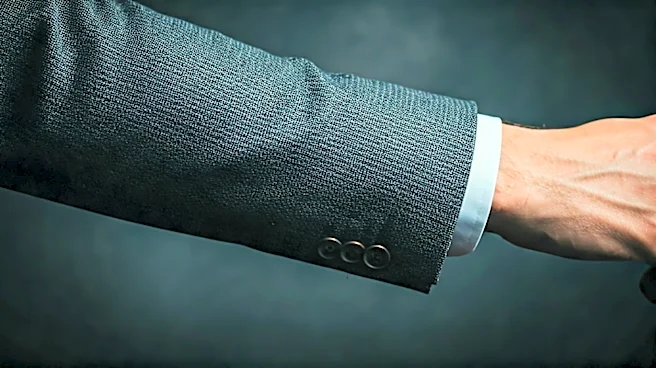
It’s not just a random push-up. It's a deliberate, two-part fold that is both more secure and more stylish than any other method. The genius lies in its construction. It creates a clean, flat roll that won't unravel throughout the day, while also allowing a sliver of the inner cuff to peek out, adding a subtle point of contrast and visual interest. It’s the sartorial equivalent of a perfect winking gesture—intentional, charming, and just a little bit cheeky.
A Step-by-Step Guide
Ready to try it? The master roll is surprisingly simple once you know the steps. It works best with standard button-cuff shirts.
1. **Start with the cuff fully unbuttoned.** This includes the smaller gauntlet button further up the sleeve placket.
2. **Execute the first fold.** Instead of starting with a small fold at the cuff, pull the entire cuff upward in one go, folding the sleeve inside-out until the edge of the cuff lands somewhere on your bicep or just above your elbow. The sleeve will now be folded roughly in half.
3. **Make the second fold.** Now, take the bottom edge of the folded fabric and fold it up again, bringing it toward your elbow. This second fold should cover most of the inside-out cuff, leaving just the top edge—perhaps half an inch—peeking out. Adjust the top and bottom for neatness, and you’re done. The result is a substantial, tidy roll that locks itself in place.
Why This Method Works So Well
The superiority of the master roll isn't just aesthetic; it’s practical. Because the cuff is trapped inside the second fold, the entire roll is more stable and far less likely to come undone. This is crucial for maintaining that effortless look—nothing kills the vibe faster than constantly having to re-roll a drooping sleeve.
From a style perspective, it accomplishes several things at once. It exposes the forearms, a classic masculine style move. It shortens the sleeve cleanly, preventing the dreaded “puffy pirate” look that can happen with other methods. And that little bit of exposed cuff is a masterstroke. If your shirt has a contrasting inner cuff pattern or color, this is the perfect way to show it off. Even with a plain white shirt, the visible edge of the cuff adds a layer of texture and intentionality. It signals that you pay attention to the details.
More Than Just a Dress Shirt
While the master roll is most commonly associated with oxford cloth and poplin button-downs, its utility doesn't end there. The technique is a game-changer for almost any long-sleeved garment. Use it on a casual chambray or flannel shirt for a weekend look that’s relaxed but not sloppy. It works wonders on the sleeves of a lightweight denim jacket or field coat, giving it structure and flair. You can even adapt it for some finer-gauge sweaters, creating a more polished and intentional push-up that doesn’t just look like a bunched-up mass of wool at your elbows. It’s a versatile tool that, once learned, becomes an indispensable part of your styling arsenal.