





Beyond the Postcard View
Think of iconic TV cities. You get Carrie Bradshaw’s pristine Upper East Side stoop, the impossibly large and affordable apartments of “Friends,” or the sweeping, glamorous skylines that open countless dramas. These cities are beautiful, but they’re often
a fantasy—a highlight reel of landmarks. “The Bear” throws that playbook away. Instead of lingering on the Bean or Navy Pier, it gives us fleeting, almost frantic shots of the “L” train, rain-slicked streets, and the unglamorous back alleys of the restaurant world. The show’s creator, Christopher Storer, is a Chicago native, and it shows. He treats the city not as a tourist destination, but as a place where people live and work, full of texture, grit, and unpolished beauty. It’s a Chicago seen from the inside out, focusing on the journey, not just the destination.
A Symphony of Work and Stress
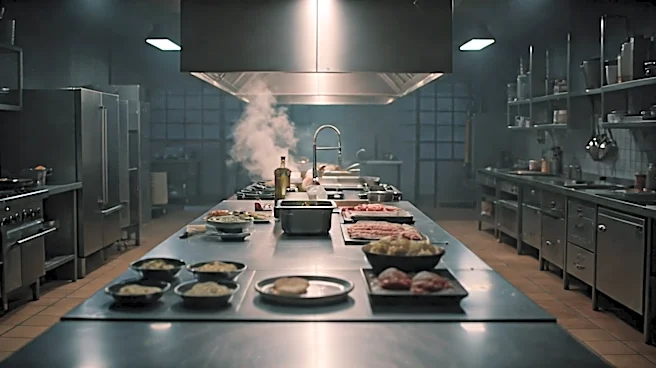
Most television characters seem to have an abundance of free time. They meet for coffee in the middle of the workday, debrief their lives over long brunches, and navigate careers that rarely seem to involve actual labor. “The Bear,” however, is a show about work. The kitchen at The Original Beef of Chicagoland—and later, The Bear—is a place of constant motion, noise, and anxiety. The characters aren’t just talking about their problems; they’re chopping onions, searing meat, and scrubbing floors while having panic attacks. This focus on the relentless grind feels uniquely true to Chicago’s identity as a blue-collar, no-nonsense town. It’s a city built on industry and effort, and the show captures that kinetic, often stressful energy perfectly. The drama isn't just interpersonal; it's operational. Can they get the sandwiches out on time? Did the supplier deliver the beef? This worship of the work itself is the show's beating heart.
The Sound of the City
The authenticity of “The Bear” goes beyond visuals; it’s deeply auditory. The dialogue is a chaotic overlap of voices, a cacophony of “corner,” “hands,” and “yes, chef” that mirrors the real-life intensity of a professional kitchen. But it’s also in the specific cadence of the characters, the way a Chicago accent peeks through, not as a caricature, but as a natural part of who they are. The show's creator is childhood friends with the owner of the real-life Mr. Beef, the inspiration for the show's restaurant, which helps explain its authentic feel. Furthermore, the soundtrack is a veritable love letter to the city’s musical history, packed with local acts like Wilco and other indie staples that feel less like a curated playlist and more like what would actually be playing on the kitchen stereo. This creates a soundscape that is as textured and layered as the city itself.
A Real Place on a Real Map
Fans and Chicago locals can literally trace the characters' steps. The show is grounded in real locations, from the iconic Mr. Beef in River North that serves as the series' spiritual home, to the Michelin-starred Ever in the West Loop, where Richie has his transformative experience. When characters talk about neighborhoods like Avondale, Logan Square, or Humboldt Park, they aren't just names on a map; they represent real cultural and culinary scenes within the city. The show uses this geography to tell its story, contrasting the old-school beef stand with the city's burgeoning fine-dining landscape. While some have noted that the show takes liberties with the character of certain neighborhoods, the overall effect is one of deep reverence for the city's fabric. It treats Chicago as a living, breathing character, full of history, contradictions, and incredible food.