




The Anatomy of a Look
Before it was a cinematic trope, Mod was a youth subculture that erupted in London in the late 1950s. Standing for 'Modernist', it was a rebellion against the drab, stuffy conventions of post-war Britain. At its heart was a devotion to sharp, continental
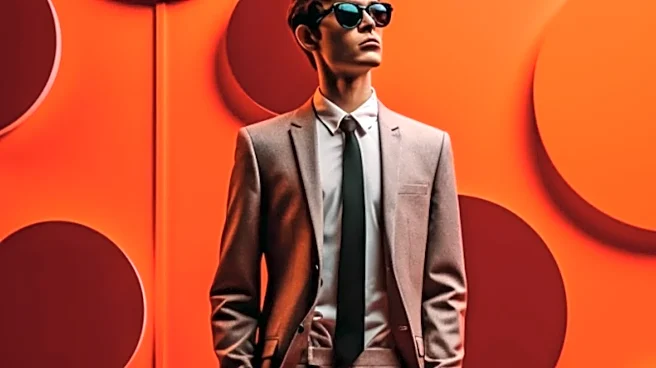
style. The uniform was precise: slim-fitting, Italian-cut suits, often with three buttons and narrow lapels. These weren't your father's baggy tweed. This was tailoring as a statement—aspirational, clean, and meticulously detailed. Fabrics like mohair gave the suits a subtle sheen, perfect for all-night clubs. Paired with button-down shirts, desert boots, and often a fishtail parka to protect the precious suit while riding a Vespa or Lambretta scooter, the look was a complete lifestyle. It was about looking forward, embracing a new, international Britain, and using clothes to carve out an identity far from the establishment.
Cinema's Original Cool
While the Mod scene thrived on the streets and in the clubs of London, its translation to the screen cemented its cultural power. Though it was released in 1979, the film 'Quadrophenia' is perhaps the most definitive cinematic portrayal of the original 1960s movement. Based on The Who's rock opera, it tells the story of Jimmy, a young Mod who lives for his clothes, his scooter, and his clashes with the rival Rocker subculture. The film codified the Mod look for generations to come, presenting it as a uniform for youthful angst and rebellion. But even earlier films like 'Blow-Up' (1966) captured the aesthetic of 'Swinging London', showcasing the sophisticated, fashion-forward end of the Mod spectrum. These early portrayals established screen archetypes: the Mod was sharp, anti-establishment, and visually distinct, providing a powerful visual shorthand for directors.
The Modern Gangster's Uniform
Flash forward a few decades, and the spirit of Mod tailoring found a new home in the stylized world of British gangster films, particularly those of director Guy Ritchie. From 'Lock, Stock and Two Smoking Barrels' to 'The Gentlemen', Ritchie’s characters are almost always impeccably dressed. Their sharp, tailored suits function as a kind of modern armor, projecting an image of success, danger, and control. This look is a direct descendant of the Mod ethos. It's about working-class figures using razor-sharp style to signal they've bypassed the traditional class system and made it on their own terms. The Kray twins, notorious London gangsters of the 1960s, famously adopted this sharp, clean look to project an image of power and sophistication, an influence that continues in on-screen portrayals of the British underworld. In these films, the tailored suit isn't just clothing; it's a declaration of ambition and a tool of intimidation.
The Spy Who Wore Mod
Perhaps the most visible modern heir to the Mod silhouette is none other than James Bond, particularly during Daniel Craig's tenure. While Bond's bespoke suits come from high-fashion houses like Tom Ford, not a backstreet tailor, their defining characteristics are pure Mod. Starting with 'Skyfall', the suits became notably slimmer and more form-fitting, with narrower lapels and a shrunken, body-conscious fit that emphasized physicality. This was a deliberate move away from the looser tailoring of previous eras, creating a Bond who was modern, sharp, and intensely physical. This evolution reflects Mod's core principle: using precise tailoring to create a powerful, modern silhouette. It's the aspirational side of the Mod look, polished for a global audience and used to project a uniquely British brand of cool, confident elegance.