



How does a legend start over? For Pantera's iconic guitarist 'Dimebag' Darrell Abbott, it was the defining challenge of his final years. His famous complaint, 'They wanted a different song,' reveals a deep conflict with the music industry.
The Unshakeable Shadow of Pantera
By the early
2000s, Pantera wasn't just a band; it was a heavy metal institution. They had rewritten the rulebook for a generation, and Dimebag’s revolutionary guitar work was the foundation of that legacy. When the band acrimoniously split in 2003, the expectations for whatever came next were impossibly high. For Dimebag and his brother, drummer Vinnie Paul, starting a new project wasn't just about making music—it was about stepping out of the colossal shadow of their own creation. The world, it seemed, wasn't ready to let Pantera go. Any new music would inevitably be measured against classics like 'Cowboys from Hell' and 'Vulgar Display of Power,' creating a no-win scenario for the Abbott brothers as they tried to navigate their future.
New Found Power, Old Expectations
That new project was Damageplan, a band formed with vocalist Pat Lachman and bassist Bob Zilla. Their 2004 debut album, 'New Found Power,' was a statement. It was undeniably heavy, built on Dimebag's signature groove and jaw-dropping solos, yet it also pushed into more modern, melodic territory. It was an attempt to evolve, not replicate. But for many, the evaluation was simple: it wasn't Pantera. The band found itself in a critical crossfire. If a riff sounded too much like their old band, they were accused of being derivative. If they explored a new style, they were seen as abandoning their roots. It was the classic paradox for an established artist trying to innovate: the very fans and industry that celebrated your signature sound can become resistant to you ever changing it.
What 'Different Song' Did They Want?
This is the context for Dimebag's frustration. The 'they' in his complaint was multifaceted: it was the record label, the radio programmers, and even a segment of the fanbase. According to Vinnie Paul in later interviews, their label at the time, Elektra Records, was pushing the band for a radio-friendly single. They wanted a guaranteed hit, a 'Pantera Jr.' that could be easily marketed and sold. For a band built on raw, uncompromising artistic integrity, this was a non-starter. They refused to write a formulaic song to please executives. The label, reportedly confused by how to market a band that wasn't a simple carbon copy of its predecessor, ended up dropping Damageplan after the album didn't achieve Pantera-level sales. The industry wanted a product they understood, but Dimebag and Vinnie wanted to deliver an honest expression of where they were as artists.
Success on Their Own Terms
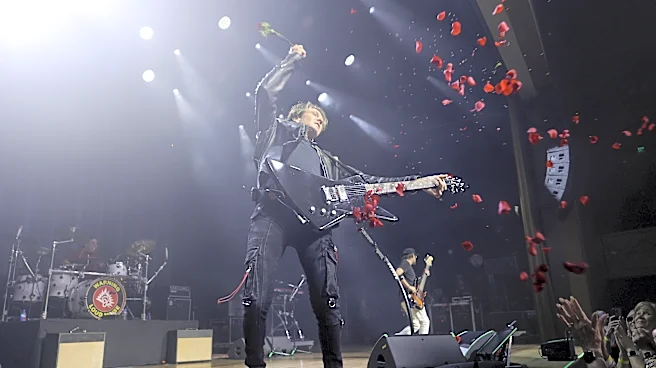
Despite the commercial pressures and the looming legacy of Pantera, Damageplan found their own version of success on the road. For Dimebag, the ultimate validation wasn't album sales or radio play; it was playing music for the people who got it. He was famous for his generosity and his connection with fans, often staying for hours to sign autographs and share a drink. For him, the tour for 'New Found Power' was about getting back to the pure joy of performance. He was playing loud, heavy music with his brother, free from the internal drama that had plagued Pantera's final years. While the industry may have 'wanted a different song,' Dimebag was playing the ones he wanted to play, for the fans who wanted to hear them. It was a reaffirmation of his core belief: the music and the fans were the only things that truly mattered.