
The Barrel Cuff: The Everyday Workhorse
The barrel cuff is the most common style found on dress shirts, and for good reason: it’s practical, versatile, and requires no special accessories. This is the single-layer cuff that closes with one or two
buttons sewn directly onto the fabric. Its simplicity makes it the default choice for everything from daily office wear to smart-casual weekends. While it's considered less formal than a French cuff, a crisp barrel cuff is perfectly acceptable for most business settings and even many semi-formal events. The presence of two buttons, either side-by-side or stacked vertically, often allows for an adjustable fit around the wrist—a useful feature for accommodating a watch. Its understated nature makes it the reliable foundation of any man’s shirt collection.
Variations on the Barrel: Mitered vs. Rounded
Not all barrel cuffs are created equal. The shape of the corner is a subtle detail that adds a distinct character. A square cuff is the most standard, offering a clean, straightforward look. A mitered cuff, also called an angled cuff, features a corner cut at a 45-degree angle. This creates a sharper, more modern, and architectural look that can subtly draw attention to a nice watch. In contrast, a rounded cuff has softened, curved edges. This style is considered slightly more relaxed and less severe than its angular counterparts, lending a softer, more refined finish without feeling stuffy. The choice between them is a matter of personal taste, with mitered cuffs feeling more contemporary and rounded cuffs appearing more classic and gentle.
The French Cuff: For Formality and Flair
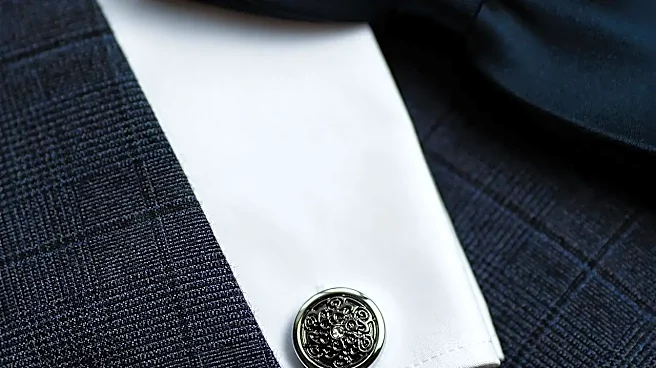
The French cuff, also known as a double cuff, is the undisputed king of formal shirt cuffs. It is roughly twice the length of a barrel cuff and is designed to be folded back on itself, creating a thick, substantial band around the wrist. Instead of buttons, it features buttonholes on both sides and must be fastened with cufflinks. This requirement instantly elevates an outfit, making French cuffs the standard for black-tie events, weddings, and the most formal business environments. Wearing them signals a deliberate attention to detail and a touch of classic elegance. Because of their extra bulk, you'll want to ensure your jacket sleeve is cut with enough room to accommodate them cleanly, allowing about a half-inch of the cuff to show.
The Convertible Cuff: The Best of Both Worlds
For the man who values flexibility, the convertible cuff is a lesser-known but highly practical option. Structurally, it looks almost identical to a standard barrel cuff, but with a key difference: in addition to the regular button closure, it has a second, hidden buttonhole on the opposite side. This clever design allows the cuff to be worn in two ways. For everyday office wear, you can simply use the button as you normally would. But for an occasion that calls for a bit more polish, you can ignore the button and fasten the cuff with cufflinks instead. This makes it an excellent choice for business travelers or anyone who wants a single shirt that can easily transition from a business-casual setting to a more formal event.
The Cocktail Cuff: A Stylish Hybrid
Popularized by James Bond, the cocktail cuff—also called a turnback or Portofino cuff—is a stylish and somewhat rare hybrid. It combines the buttoned closure of a barrel cuff with the folded-back appearance of a French cuff, creating a distinctive look without the need for cufflinks. The cuff is cut longer and designed to turn back over itself, fastening with buttons. It sits in a unique style space, dressier and more intentional than a standard barrel cuff but less formal than a French cuff. It's a confident choice for smart-casual events or for someone looking to add a touch of vintage, cinematic flair to a suit or sport coat. While not as common in ready-to-wear, it's a signature detail offered by many bespoke shirtmakers.