




The Old American Soccer Soundtrack
For years, the soundtrack to U.S. men’s soccer has felt… well, a little borrowed. The most prominent chants are often simple, like the direct "U-S-A!", or adapted from other sports and countries. The most famous, "I Believe That We Will Win!", has a patriotic
backstory originating from the Naval Academy in 1998 before being popularized during the 2014 World Cup. While earnest and loud, it, along with others pushed by supporter groups like the American Outlaws, has sometimes been criticized as repetitive or lacking the organic, clever edge found in the terraces of England or the drum-fueled carnivals of South America. There's a sense among some fans that American soccer culture has been trying hard to emulate traditions from abroad rather than creating its own.
Why 2026 Is a Game Changer
Hosting the World Cup for the first time in 32 years changes everything. Unlike tournaments abroad that require costly travel, this World Cup is happening in our backyards. Major cities across the U.S. have transformed public spaces into massive, free-to-attend fan zones. New York has a 50,000-person watch party planned for the final in Central Park; Miami's Bayfront Park is hosting a 23-day festival; and Los Angeles has spread ten fan zones across the county. This unprecedented access brings together not just the die-hard members of supporter groups, but tens of thousands of casual fans, families, and new converts who are experiencing the highs and lows of the tournament together on a massive scale.
The Watch Party as a Songwriting Lab
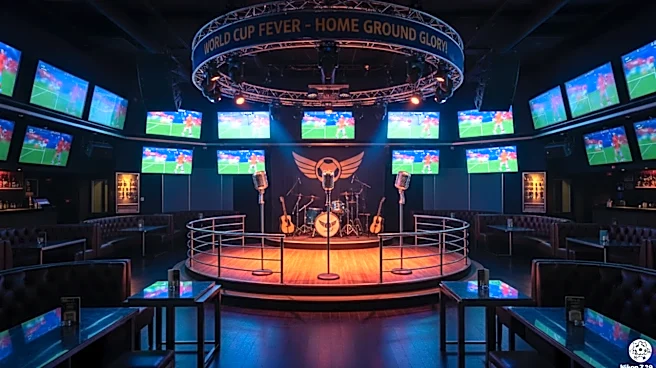
This is where the magic happens. A traditional soccer chant often starts with a small group of fans, gets picked up, and spreads. But the 2026 watch parties are different; they are decentralized, chaotic, and enormous social mixing chambers. They aren’t just for watching the game; they are day-long events with live music, food, and a diverse crowd that cuts across every demographic. In these informal, festival-like atmospheres, a clever line shouted in a beer garden in Kansas City or a funny player-specific tune hummed in a fan park in Philadelphia has a better chance of being heard, repeated, and recorded on a thousand phones. This environment is less about organized, top-down chanting and more about spontaneous, collective creation.
From TikTok to the Terraces
The internet has already radically sped up how chants are born and spread globally. A clever song can go from a single fan's social media post to an entire stadium's anthem in a matter of days. Now, combine that digital accelerant with the physical reality of hundreds of thousands of fans gathered in watch parties. A moment of on-field brilliance or controversy can be turned into a meme, then a chant, within a single match. A fan's viral video of a new song from a watch party in Dallas could be sung by the traveling fans in New Jersey by the next game. This fusion of physical gathering and digital distribution means a truly American soccer song—one born from a shared, public experience rather than an online forum—could catch fire with unprecedented speed.
What Will the New Songs Sound Like?
So, what will this new American soccer sound be? It will likely be more authentic to the country's diverse cultural fabric. Instead of just adapting British pub tunes, we might see chants with the rhythm of hip-hop, the narrative wit of a country song, or the bilingual energy that’s already present in so many communities. Think less "we're trying to be European fans" and more embracing what American fan culture already does well: spectacle, humor, and earnest, unapologetic emotion. The shared experience of a home World Cup provides the inspiration and the platform; the nation's sprawling, interconnected watch parties are the creative engine ready to turn the moments of this tournament into the songs of tomorrow.