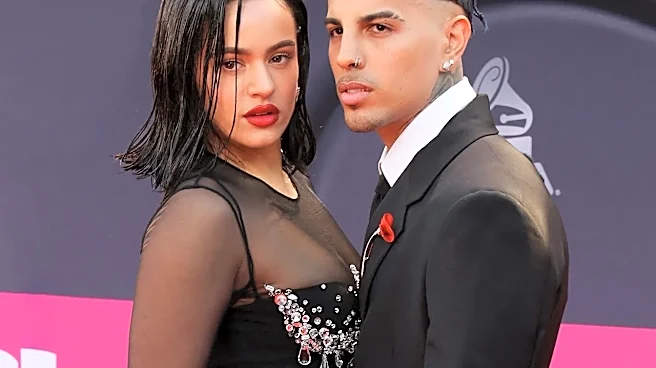









Every awards season needs a frontrunner that feels both inevitable and exciting. This year, it’s 'Verano Rosa', the blockbuster collaboration from Latin music’s reigning power couple, Feid and Karol G. But is it a shoo-in for a Latin Grammy?
The Song That Defined the Summer
Released in
the heart of summer 2026, 'Verano Rosa' ('Pink Summer') became more than just a hit; it was a cultural mood board. The track sees Feid and Karol G steering away from the high-energy, club-focused reggaeton that dominates the charts. Instead, they delivered a mid-tempo, nostalgic anthem layered with a subtle melancholy. It’s a song built for late-night drives and sunset reflections, capturing a feeling of bittersweet romance that resonated globally. While its commercial success was a given—topping charts from Bogotá to Madrid—its critical reception was what shifted the narrative. Critics praised its musical maturity, sophisticated production, and the lyrical depth exploring the complexities of a public relationship. This wasn't just another hit; it was perceived as an artistic statement. The song was first mentioned by Karol G in a 2023 interview as an unreleased track about heartbreak, adding a layer of history that fans latched onto.
A Power Couple's Chemistry, Solidified
The narrative surrounding 'Verano Rosa' is inseparable from the real-life romance between Karol G and Feid (also known as Ferxxo). Their relationship, which moved from rumored collaboration to a publicly celebrated partnership, has captivated fans for years. They first worked together on the 2021 track 'Friki', sparking speculation that only grew as they toured together. The song's release came at a time when their bond was firmly established, adding a layer of authenticity to its romantic themes. Feid himself has spoken about the process of finding a sound where both artists could feel comfortable and distinct, a challenge they evidently overcame. This collaboration isn't just a calculated industry pairing; it feels like a natural extension of their personal and creative partnership, something that makes the song's emotional core feel earned and genuine to listeners.
Navigating the Latin Grammy Gauntlet
Winning a Latin Grammy, especially in the competitive urban categories, is no easy feat. The Latin Recording Academy’s voters often reward tracks that either push the genre's boundaries or represent its commercial peak with flawless execution. Recent rule changes have even tightened the definition of what qualifies as 'urban', now requiring a 60% threshold of urban elements. Past winners in reggaeton performance categories have included a mix of dance-floor anthems and more experimental tracks. 'Verano Rosa' finds itself in a unique position: it's a commercial behemoth, but its subdued, almost alternative-R&B_tinged reggaeton sound gives it the artistic credibility that the Academy often looks for. It's not a straightforward 'perreo' track, which could be its greatest strength, signaling a potential shift in the kinds of reggaeton performances the institution chooses to honor. The eligibility window for the 2026 awards, which ran through May 31, 2026, perfectly positions this summer anthem for consideration.
What a Nomination Would Mean
For both artists, a major nomination for 'Verano Rosa' would be significant, but for different reasons. For Karol G, it would be another jewel in her crown as one of the most dominant and influential Latin artists in the world, further cementing her legacy of breaking barriers. She has already won numerous Latin Grammys, including for Album of the Year, and has successfully crossed over into the mainstream U.S. market. For Feid, an artist who spent years as a successful songwriter before breaking out as a solo superstar, a win in a top category for a song he co-created would be a powerful validation of his unique artistic vision. His recent work has been praised for its experimental and intimate nature, pushing his 'Ferxxo' persona into more reflective territory. A win for 'Verano Rosa' would not only celebrate their success as a couple but also recognize their individual evolutions as artists who are shaping the future of Latin music.