






The 'More Is More' Fallacy
There's a pervasive idea that the crafts in a period drama are inherently more impressive simply because there's more of them. More fabric, more set dressing, more elaborate hairstyles. But awards voters, at their best, are rewarding design that serves
a story, not just design that fills a frame. The subtle, character-defining choices in a contemporary show like "Succession"—where a character's entire worldview is communicated by the fit of their suit or the sterile emptiness of their apartment—can be just as, if not more, impactful. The Emmys, for instance, have separate categories for period, contemporary, and fantasy/sci-fi productions, acknowledging that excellence isn't defined by a single genre. This split allows voters to judge work on its own terms, recognizing that creating a believable, modern world requires a distinct and difficult skillset. A win isn't about the quantity of design, but the quality and intentionality behind it.
The Museum Piece Problem
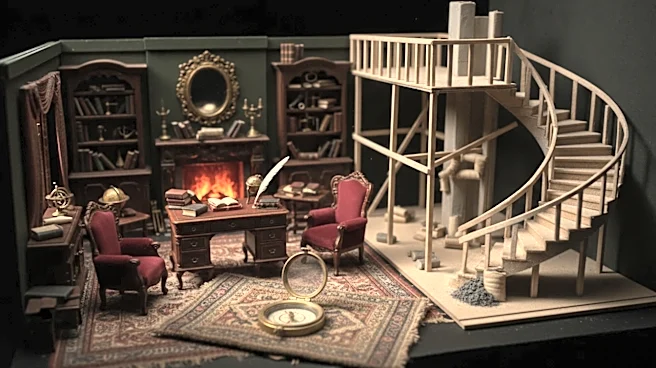
One of the greatest challenges for a period production is avoiding the 'museum piece' trap, where a setting looks historically accurate but feels completely lifeless. A production designer’s job isn't just to replicate the past, but to make it feel inhabited, messy, and real. The goal is to build a world, not a diorama. When costumes and sets look too perfect, they can create a barrier between the audience and the story, making the characters feel like they’re playing dress-up rather than living their lives. Designers often speak of the need to "weather" or "age" costumes and sets to make them look lived-in. Success lies in the details that suggest a history beyond what's on screen—the scuff on a boot, the faded spot on a rug, the clutter on a desk. Without that sense of lived-in reality, even the most opulent production can feel hollow and, ironically, less impressive to industry voters who know the difference.
An Industry Bias Toward Innovation
While period pieces are often seen as Oscar and Emmy bait, there's a competing bias within creative fields: a deep appreciation for innovation and world-building from scratch. Designing for a fantasy or sci-fi epic like "Dune" or "Andor" requires inventing entire cultures, technologies, and aesthetics. This act of pure creation is often seen as more artistically demanding than the act of historical recreation, which, fairly or not, can be perceived as an exercise in research and replication. The success of films like "Poor Things," which blended historical silhouettes with fantastical, surrealist elements to create something entirely new, underscores this point. It won Oscars for its crafts not just because it looked stunning, but because it looked like nothing voters had ever seen before. In this context, a historically perfect recreation of an 18th-century drawing room might seem less imaginative by comparison, even if the execution is flawless.
It's Always About the Story
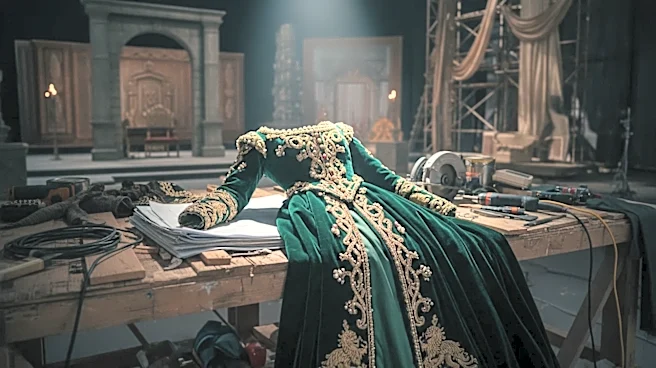
Ultimately, the best design—whether in costumes, sets, or hairstyling—is invisible. Not literally, of course, but in the sense that it is so perfectly integrated with the characters and narrative that you don't think of it as 'design.' It simply feels true. An exquisite gown in "Bridgerton" isn't just a pretty dress; it’s a reflection of a character's social aspirations or rebellious spirit. The decaying grandeur of a family home in a drama tells a story of decline before a single line of dialogue is spoken. Craft becomes award-worthy when it deepens our understanding of who the characters are and what their world feels like. This is a universal principle that applies equally to a grimy sci-fi outpost, a minimalist modern condo, or a glittering royal court. The supposed advantage of period dramas is really just a greater opportunity for visual splendor. But splendor without story is just decoration, and voters know the difference.