




Why the Change Was Needed
First, let's set the stage. For decades, the World Cup followed a simple, elegant formula: 32 teams, eight groups of four, with the top two from each group advancing to a 16-team knockout stage. It was a perfect, month-long drama. But in the name of growth
and inclusivity (and, let’s be honest, revenue), FIFA voted to expand the tournament to 48 teams for the 2026 edition, co-hosted by the United States, Mexico, and Canada. The challenge was how to structure it. An initial, widely criticized plan involved 16 groups of three, a format that invited collusion and dead-rubber games. Thankfully, FIFA reconsidered and landed on a model that, while more complex, promises a spectacular finish.
The New Group Stage: A Numbers Game
The 2026 tournament will begin with 12 groups of four teams each. This part feels more like the old World Cup than an NFL season. Each team plays three group-stage games. The top two teams from every group automatically advance to the knockout round. That accounts for 24 teams. But to get to the magic number for a clean bracket, they needed more. This is where it gets interesting: the eight best-performing third-place teams from across all 12 groups will also earn a spot in the next round. This adds a wild layer of complexity and drama, as teams in the final group games will be scoreboard-watching, calculating goal differentials to see if they can sneak through.
The Main Event: A 32-Team Knockout Bracket
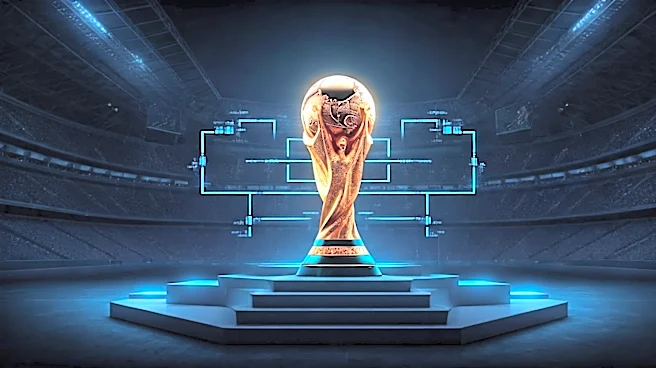
And here is where the NFL playoff comparison clicks into place. After the chaotic group stage concludes, the 32 surviving teams will enter a massive, single-elimination knockout bracket. This is the heart of the new format and the part that will feel most familiar to American fans. Forget conferences and byes; think of it as a 32-team version of March Madness or a super-sized NFL postseason where every game is win-or-go-home. This creates a brand-new “Round of 32,” adding an entire extra layer of knockout football to the tournament. From this point on, the path to the final is simple and brutal: win five consecutive knockout matches to lift the trophy.
More Games, More Drama, More Upsets
The structural similarity to the NFL’s postseason isn’t about seeding or home-field advantage, but about the sheer scale and sudden-death nature of the bracket. The old 16-team knockout was intense, but a 32-team bracket doubles the entry points for chaos. It gives more “Wild Card” style teams—the ones that barely scraped through the group stage—a chance to get hot at the right time. This format is practically designed to produce Cinderella stories. A team could lose a group stage game, squeak through in third place, and then go on an epic, five-game run to glory. It increases the total number of tournament games from 64 to a staggering 104, ensuring a month and a half of non-stop drama where every single match in the bracket carries immense weight.