


The Quiet American
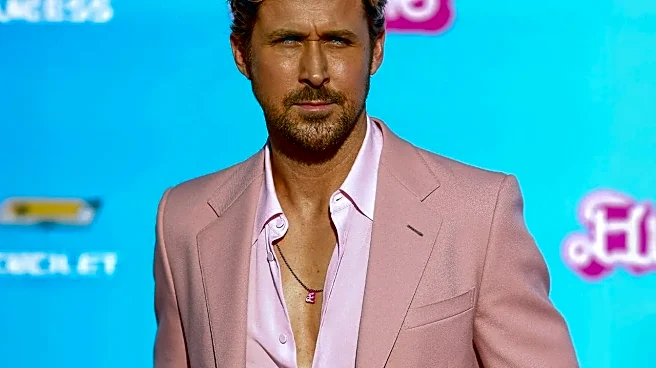
In First Man, director Damien Chazelle needed an actor who could convey a universe of internal pressure without saying a word. He chose Ryan Gosling. Gosling’s portrayal of Neil Armstrong is a masterclass in subtraction. Instead of the square-jawed bravado
we expect from cinematic astronauts, he gives us a man who seems to shrink from the spotlight. Critics noted that Gosling dialed down his natural star power, presenting an Armstrong defined by unsmiling reticence. This isn't the hero who charges into danger with a confident quip. This is an engineer, a father, and a man quietly haunted by loss, who processes his world through focused professionalism rather than emotional displays. His performance is built on conveying the discipline and superhuman nerve required for the job, rather than on theatrical heroics.
The Power of Restraint
Much of Gosling’s power as Armstrong comes from his command of silence. Throughout his career, he has perfected a kind of minimalist acting where less movement creates more gravity. For the role of Armstrong, a man known for being emotionally contained, this was the perfect fit. Gosling doesn't perform grief or fear; he contains it, letting the camera capture the immense internal struggle. While some might see this as cold, it’s a deliberate choice that honors the real man. Armstrong compartmentalized his feelings, especially the profound grief over his daughter's death, channeling them into his work. Gosling makes this internal process visible. His stillness becomes a form of action, pulling the audience into his character's isolated state rather than pushing emotion onto them. It’s a quiet performance that speaks volumes.
Humor Under Pressure
A nervous, reluctant hero isn’t necessarily a humorless one. The comedy in Gosling’s performance isn't found in one-liners but in the awkward, dry moments of a man deeply uncomfortable with the spectacle surrounding him. Think of the press conferences or the stilted family conversations; there's a subtle, situational humor that arises from his earnest inadequacy in the face of social demands. This reflects a truth Gosling himself has noted: funny things happen even in dramatic situations, and acknowledging the humor can even heighten the sadness. His Armstrong isn’t trying to be funny, which is precisely why it works. It’s the comedy of a serious person in an absurd situation, a human-scale reaction to the cosmic scale of his mission.
Reluctance as a Virtue
Ultimately, it is Armstrong's reluctance that makes him so compelling. If he were a fearless adventurer, the story would lose its stakes. Instead, Gosling plays him as a man acutely aware of the mortal risks, not just for himself but for his family. This portrayal subverts the stereotype of the happily waving astronaut's wife, with Claire Foy's Janet Armstrong grounding the film in anxiety and sacrifice. The hero isn't a hero because he lacks fear, but because he acts in spite of it. Gosling’s innate audience goodwill allows him to embody a character who is distant and isolated without becoming unlikable. His reluctance feels authentic. He isn’t seeking glory; he is doing a job that needs to be done, carrying the weight of personal loss and national expectation. This vulnerability makes his eventual triumph—that one small step—feel monumental.