
Rudolph the Red-Nosed Reindeer (1964)
The undisputed king of Christmas specials, 'Rudolph' is the defining work of production company Rankin/Bass and its signature 'Animagic' stop-motion style. Animated in Japan, the puppets had a distinct,
slightly jerky charm that felt like watching toys come to life. The tactile, handcrafted quality—from Santa's yak-hair beard to Rudolph's glowing nose—created a tangible world that has enchanted families for generations, making it the longest-running Christmas special in history.
The Year Without a Santa Claus (1974)
Another Rankin/Bass stop-motion gem, this special cemented the studio's holiday legacy, largely thanks to the unforgettable Miser Brothers. The designs for Heat Miser and Snow Miser are masterpieces of character animation, with their expressive faces and dynamic musical numbers showcasing the personality that could be packed into these puppets. It demonstrated how stop-motion could create iconic, larger-than-life characters that steal the show.
The Nightmare Before Christmas (1993)
Tim Burton and director Henry Selick took stop-motion to a new artistic level. More fluid and ambitious than its predecessors, this film involved over 200 meticulously crafted puppets and an astonishing 100,000+ frames of film. The spindly design of Jack Skellington, once considered a challenge for animators, became a triumph of the form, resulting in a dark, beautiful, and utterly unique holiday classic that blurred the lines between Halloween and Christmas.
A Charlie Brown Christmas (1965)
This special is a masterclass in the beauty of simplicity. Its hand-drawn animation is famously minimal, with simple character models and a sparse look that broke from the lush style of Disney. Yet, that unpolished feel is precisely its strength. It gives the film a quiet, contemplative quality that perfectly matches its message about finding meaning beyond commercialism. Its enduring appeal proves that powerful storytelling doesn't require technical flash.
How the Grinch Stole Christmas! (1966)
Directed by animation legend Chuck Jones, the original 'Grinch' is a tour de force of expressive hand-drawn animation. Jones, famous for his work on Looney Tunes, brought a level of personality and comedic timing to the Grinch's every smirk and slink. Collaborating with Dr. Seuss, Jones translated the book's visual style into moving art, creating a character whose transformation from cynical hermit to warm-hearted hero is visible in every expertly drawn frame.
Frosty the Snowman (1969)
If 'Rudolph' defined stop-motion for Rankin/Bass, 'Frosty' was its hand-drawn counterpart. The animation has the warm, gentle feel of a children's storybook come to life. The rounded shapes and soft color palette give the special an innocent, timeless quality. It doesn't aim for complex motion, but instead captures the simple joy of a snowman's magical day, feeling less like a cartoon and more like a moving illustration.
The Snowman (1982)
A wordless wonder, this British classic relies entirely on its visuals and score to tell its story. The hand-drawn animation was created with soft crayons and pastels, giving it a dreamy, ethereal texture unlike any other Christmas film. Each frame feels like a piece of fine art, creating a gentle, poignant atmosphere that perfectly captures the fleeting magic of a childhood friendship.
Tokyo Godfathers (2003)
From the legendary director Satoshi Kon, this Japanese anime feature shows that hand-drawn animation can tackle mature, unconventional Christmas stories. Set on Christmas Eve, it follows three homeless people who find an abandoned baby. The animation is stunningly realistic and detailed, capturing the gritty yet beautiful urban landscape of Tokyo. It's a powerful, funny, and deeply human film that broadens the definition of a holiday story.
Klaus (2019)
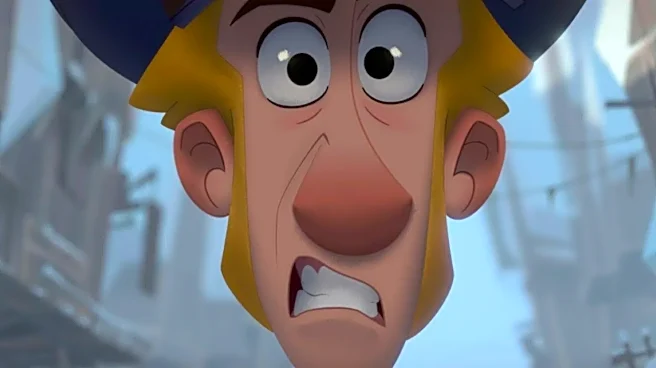
This Netflix film single-handedly revitalized 2D animation. While entirely hand-drawn, the filmmakers developed a groundbreaking tool that added volumetric lighting and textures to the characters. This gave the film a unique, dimensional look that felt both classic and completely new. 'Klaus' proved that traditional animation could still innovate, creating a visually stunning and emotionally resonant Santa Claus origin story for a new generation.
The Polar Express (2004)
A technological pioneer, this was the first feature film made entirely with performance-capture animation. Actors like Tom Hanks performed scenes in sensor-studded suits, and that data was used to create the digital characters. While its hyper-realistic style was sometimes considered unsettling, the technique allowed for a unique blend of human performance and CG artistry, aiming to bring the painterly illustrations of the beloved book to three-dimensional life.
Arthur Christmas (2011)
Coming from Aardman, the studio famous for claymation, this film was a brilliant leap into CGI. The movie answers the age-old question of how Santa delivers every present in one night with a high-tech, military-style operation. The computer animation allowed for a massive scale and slick action sequences that would have been impossible in stop-motion, but it still retained Aardman's signature charm, with quirky character designs and a very British sense of humor.