



Not Aliens, But Just as Amazing
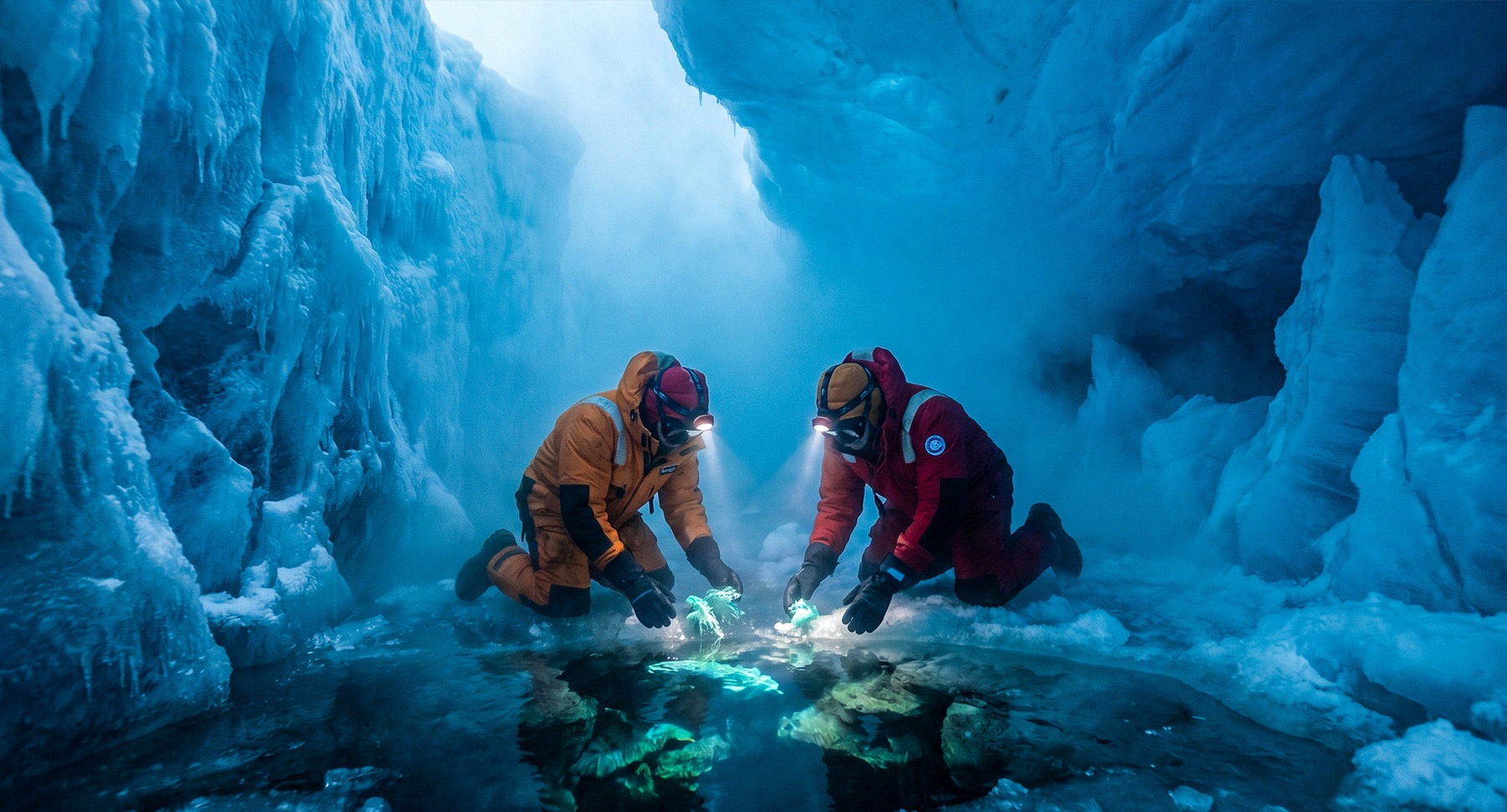
When we hear “life,” our minds might leap to complex creatures from a sci-fi thriller. The reality of what’s thriving 13,000 feet beneath the Antarctic ice sheet is, in some ways, even more profound. Scientists drilling into subglacial bodies of water, like the famous Lake Vostok, have found a world teeming not with fish or squids, but with microscopic life: bacteria, archaea, and other single-celled organisms. Before you get disappointed, understand this: finding these microbes is a monumental achievement. These are not just any bacteria; they are extremophiles, organisms that survive—and thrive—in conditions that would instantly kill almost any other known life form. They've been isolated from the rest of the planet for, in some cases, millions
of years, making them a living time capsule from a lost world.
How Life Survives Without the Sun
On the surface of Earth, nearly all life depends on the sun. Plants use photosynthesis to turn sunlight into energy, and animals eat those plants (or eat other animals that eat plants). But 13,000 feet below the ice, there is absolute, permanent darkness. Sunlight has never touched these waters. So how does anything live? The answer is chemosynthesis. Instead of using sunlight, these microbes have evolved to “eat” rocks and minerals. They derive energy by breaking down chemical compounds found in the rock bed and sediments of the lake floor, such as iron, manganese, and sulfur. They are completely self-sufficient, forming the foundation of a unique food web that exists in total isolation. They don’t need the sun, the sky, or any connection to the outside world, proving that life is far more resourceful than we ever imagined.
The Ultimate Extreme Environment
It’s hard to overstate the hostility of this environment. The pressure at the bottom of Lake Vostok is immense, around 400 times greater than at sea level—equivalent to the weight of a skyscraper pressing down on every square inch. The water temperature hovers near freezing. The environment is also extremely low in nutrients. Yet, within this crushing, frigid darkness, life found a way. The discovery required one of the most challenging scientific expeditions ever undertaken. To avoid contaminating this pristine, ancient ecosystem, researchers had to develop specialized, sterile drilling technology. It took years of international effort to carefully pierce the ice sheet and sample the water without introducing any surface microbes, a feat of engineering as impressive as the biological discovery itself.
Why This Changes Everything
So, we found some tough bacteria. Why does this matter to anyone but a handful of microbiologists? Because it provides a powerful blueprint for where to look for life beyond Earth. Our solar system has several worlds that look a lot more like Lake Vostok than they do like Kansas. Jupiter’s moon Europa and Saturn’s moon Enceladus are both believed to have vast liquid water oceans hidden beneath thick shells of ice. For decades, these have been leading candidates in the search for extraterrestrial life. The problem was, we didn’t know if life could actually evolve and sustain itself in such a cold, dark place without access to a sunlit atmosphere. The life under Antarctica provides a definitive answer: yes, it can. If life can thrive by munching on minerals in a pressurized, dark, freezing lake on Earth, it’s entirely plausible that similar organisms are doing the exact same thing in the hidden oceans of other worlds right now.