

Why Your Shoes Are the Anchor
The length of your trousers has a massive impact on your overall appearance, capable of making you look sharp and put-together or, conversely, sloppy and dated. But that perfect length isn't an absolute number; it’s a relationship between your leg and your shoe.
The single most important factor in getting a trouser hem right is the shoe you plan to wear. A sleek dress loafer sits lower on the foot than a sturdy Oxford, and a dress boot has a higher shaft that interacts with the fabric differently. Taking a pair of trousers to be altered without the specific shoes you'll wear with them is like getting a haircut without your head. The tailor is forced to guess, and even a half-inch of miscalculation can throw off the entire silhouette, leading to awkward bunching or a hem that appears too short.
Understanding the 'Break'
In menswear, the term “break” refers to the horizontal fold or crease in the fabric of your trousers where the leg meets your shoes. It’s the key to determining your ideal length, and there are several distinct styles, each creating a different effect. A "no break" hem is the most modern, where the trouser hem just skims the top of the shoe without folding. This creates a clean, sharp line ideal for slim-fit trousers and loafers. A "slight break" or "quarter break" is the most versatile and widely recommended option, featuring a minimal, subtle crease at the front. It's a timeless look that works perfectly for business and most formalwear. A "medium break" or "half break" has a more noticeable fold and is a conservative, classic choice often suited to heavier fabrics like flannel or wider-leg trousers. Finally, a "full break" involves a deep fold of fabric resting on the shoe, a traditional look that can appear dated if not paired intentionally with wide-leg, vintage-style pants.
Matching the Hem to the Shoe Style
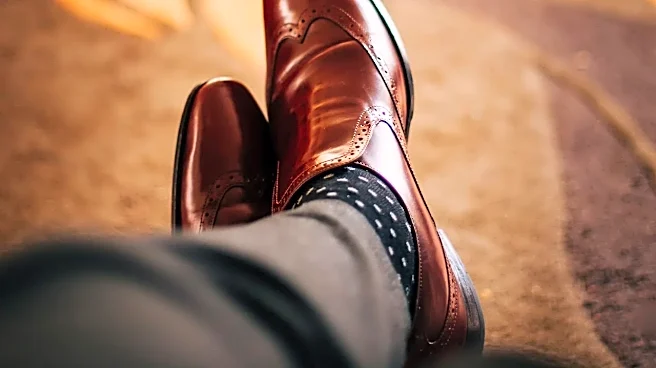
Different shoes demand different breaks. Sleek, low-vamp shoes like loafers look best with a shorter hem—either a slight break or no break at all—to keep the clean lines from becoming messy. Classic lace-up dress shoes, such as Oxfords or Derbies, are the most flexible and work well with a slight or medium break, which is considered the gold standard for professional settings. Boots present a unique challenge. Because the shaft of the boot extends up the ankle, a trouser hem might need to be slightly longer to ensure it drapes smoothly over the boot without getting caught. The width of the trouser opening also comes into play; a narrow, tapered leg won't fit over a bulky shoe and will bunch unattractively.
Your Pre-Tailor Checklist
To avoid a costly mistake and ensure a perfect result, a little preparation is key. First and foremost, always bring the exact shoes you intend to wear most often with the trousers to your fitting appointment. Don't just bring a shoe with a similar heel height; the overall shape, from the toe to the vamp, affects how the fabric falls. When you're at the tailor, put on both the trousers and the shoes and stand naturally. Let the tailor pin the length, then take a moment to look at it from the front, side, and back. The back of the hem should ideally sit around the top of your shoe's heel, not dragging on the floor. If you plan to wear the trousers with multiple pairs of shoes with different profiles, bring the most important pair or discuss finding a happy medium with your tailor. A slight break is often the safest compromise.