





The Show-Stealing Role That Almost Wasn’t
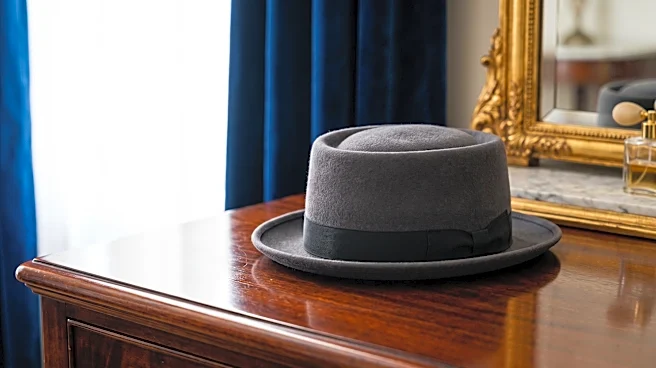
When you picture the movie musical Singin' in the Rain, you picture Gene Kelly splashing in the street. But you also picture Cyd Charisse. In a film packed with iconic moments, her appearance in the 'Broadway Melody' ballet is a showstopper. As a vampish
gangster's moll in emerald green, she uses one of her famously long legs to snatch Kelly’s hat, all without speaking a single word. It’s a five-minute performance that launched her into superstardom. Yet, Charisse was not the studio’s, or even Kelly's, first choice. The part was originally intended to feature Kelly’s dance assistant, Carol Haney. Before that, the entire sequence was an afterthought, added late in production after the success of An American in Paris proved that audiences loved a dream ballet.
A Star's Vision vs. The Studio Machine
The casting switch came down to a conflict between artistic vision and studio preference. Gene Kelly, the film’s star and co-director, needed a partner with serious ballet training to execute his demanding choreography. His own leading lady, Debbie Reynolds, was a gifted comedian and singer but not a trained dancer. Kelly initially championed his assistant, but producer Arthur Freed ultimately made the call for Charisse. He needed a dancer who could, as director Stanley Donen put it, “stop a man by just sticking up her leg.” Charisse, with her classical ballet background and smoldering screen presence, was the perfect fit. She brought a unique combination of technical prowess and sensual allure that made the sequence unforgettable, justifying Freed's decision and cementing her place in film history.
The Trouble with Being Too Tall
The hesitation around casting Charisse wasn't limited to just one film. For 1953's The Band Wagon, she was paired with the legendary Fred Astaire. This time, the concern wasn't about her dancing ability but her height. At 5' 6", she was statuesque, and in heels, she could appear taller than many of her male co-stars, including Astaire and Kelly. Charisse herself recounted the story of Astaire walking into her rehearsal and subtly sizing her up in the mirror. Panicked, she tried to discreetly bend her knees to appear shorter. The tactic, or perhaps her undeniable talent, worked. Producer Arthur Freed called her right after Astaire left to confirm she had the part, telling her, “he doesn't think you're too tall.” The on-screen result was magic, particularly in the classic 'Dancing in the Dark' sequence.
Beautiful Dynamite
The irony is that the very qualities that sometimes gave studios pause—her height, her specialized skill as a classically trained dancer rather than a traditional actress—were precisely what made her an icon. While other actresses of the era were known for being cute and bubbly, Charisse brought a sophisticated, sensual energy to the screen. Fred Astaire would later refer to her as “beautiful dynamite,” adding in his autobiography, “When you've danced with her, you stay danced with.” Gene Kelly, on the other hand, was a more athletic and physically demanding partner who appreciated her strength and balletic foundation. Charisse noted the difference, explaining that Astaire “moved like glass,” while with Kelly, “When he lifts you, he lifts you!” Her ability to adapt to both titans of dance proved she was more than just a pretty face with great legs; she was a versatile and powerful artist in her own right.