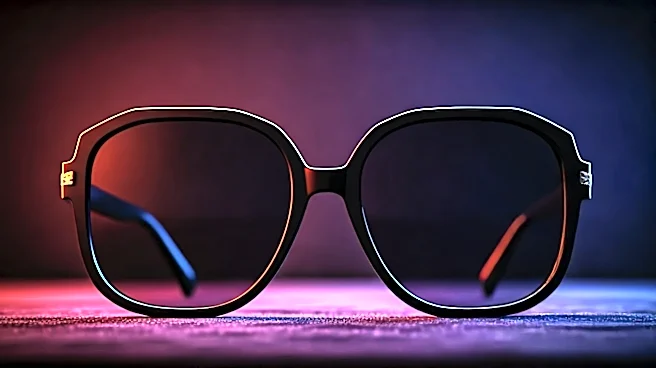








The Unspoken Rules of Red Carpets
First, let’s establish the baseline. On a traditional red carpet, like the Oscars or the Golden Globes, eye contact is currency. It’s about connection—with the photographers, the interviewers, and the audience at home. Wearing sunglasses on these hallowed grounds is often seen as a transgression. It can read as aloof, disrespectful, or, in the case of legends like Jack Nicholson, a power move so audacious only an icon could get away with it. The unspoken rule is: we want to see your eyes. It’s a performance of vulnerability and accessibility, even if it’s manufactured for the cameras. The goal is to be seen as a glamorous-yet-relatable movie star, not an untouchable rock god hiding behind a shield of polycarbonate.
The AMAs: A Different Kind of Cool
Now, enter the American Music
Awards. The AMAs operate on a completely different cultural frequency. Unlike the industry-voted Grammys or the academy-led Oscars, the AMAs are fan-voted. This simple fact changes everything. The red carpet isn't about impressing a panel of peers; it's about projecting a persona directly to a passionate fan base. The vibe is younger, more chaotic, and infinitely more concerned with what’s trending on TikTok than what’s considered timeless elegance. It’s a celebration of pure pop spectacle. Here, the traditional rules of Hollywood decorum don't just get bent—they’re often completely ignored in favor of something more immediate and impactful: brand.
Sunglasses as Performance Art
On the AMAs carpet, oversized sunglasses are not a barrier; they are a prop. For artists like Bad Bunny, H.E.R., or Machine Gun Kelly, shades are an integral part of their public identity. They aren’t hiding; they are amplifying a specific character. H.E.R.'s signature sunglasses cultivate an aura of cool, enigmatic talent. Bad Bunny’s eclectic, often tiny-but-somehow-oversized frames are central to his status as a boundary-pushing global fashion icon. For these artists, taking off their sunglasses would be like a superhero removing their mask—it would break the fantasy. At the AMAs, the fantasy *is* the point. The sunglasses signal that you are witnessing not just a person, but a fully-realized pop-cultural product, a walking music video aesthetic. It’s a statement that says, “The performance has already begun.”
A Shield and a Megaphone
There’s a powerful duality at play. On one hand, the sunglasses provide a shield, offering the wearer a sliver of privacy amidst the sensory overload of flashing bulbs and screaming fans. They create a protective bubble, allowing the star to maintain composure and mystique. But on the other hand, they function as a megaphone for their brand. A pair of dramatic, face-obscuring sunglasses is a deliberate, powerful choice. It’s an act of sartorial control in a situation where the artist is otherwise being consumed from all angles. It asserts a level of untouchable cool that feels perfectly at home at an event celebrating the larger-than-life nature of modern pop stardom. At the Oscars, hiding your eyes might seem rude. At the AMAs, it’s just good business.