







The Big Reveal: It's Soccer
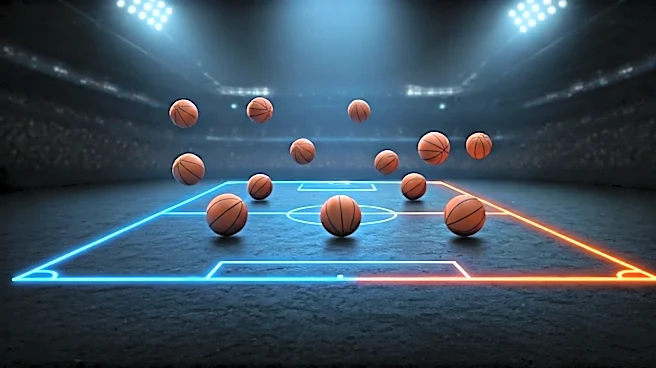
Let’s get this out of the way immediately: 4-3-3 is one of the most popular and influential formations in modern soccer. The numbers refer to the distribution of players on the field: four defenders, three midfielders, and three forwards (the goalkeeper
isn't counted). While basketball lineups are described by position (two guards, two forwards, one center), soccer formations are a numerical shorthand for a team's tactical philosophy. The 4-3-3 is an attacking-minded setup. It aims to control the midfield, the “center of the court,” while providing plenty of offensive firepower with a trio of attackers up front. It’s flexible, dynamic, and requires players who are more than one-dimensional specialists. Sound familiar? While the numbers are different, the underlying principles are starting to look awfully similar to the trends shaping today’s NBA.
Building the NBA 4-3-3: The Attack
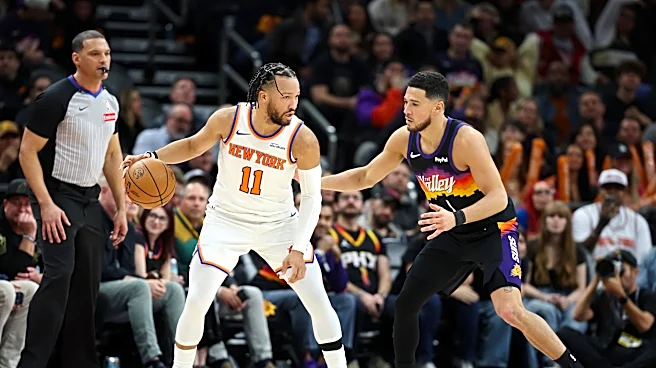
So, how would we translate soccer’s front three to the hardwood? Think of them not as positions, but as roles. The two wide forwards in soccer are like elite NBA wing scorers—players like Kevin Durant or Devin Booker, whose primary job is to isolate, create their own shot, and finish. They stretch the defense and create space. The most interesting comparison is the central forward, or striker. Traditionally, this is a pure goalscorer, like Shaquille O’Neal in the paint—a physical force you feed for a high-percentage look. But modern soccer has popularized the “false nine,” a striker who drops deep to act as a playmaker. Who is the ultimate NBA “false nine”? Nikola Jokić. He occupies the center position but orchestrates the entire offense, a point guard in a giant’s body, turning the traditional role on its head just like Lionel Messi did for Barcelona.
The Midfield: The Engine Room
In soccer, the midfield is everything. It’s the engine, the link between defense and attack. A balanced three-person midfield has distinct but complementary roles that translate beautifully to basketball. First, you have the holding midfielder, the defensive anchor who breaks up plays and protects the back line. This is your Draymond Green—a high-IQ defender who isn’t always a primary scorer but whose defensive gravity and playmaking are essential to freeing up everyone else. Then you have the “box-to-box” midfielder, a two-way workhorse who contributes on both ends. Think of Kawhi Leonard or Jayson Tatum—elite perimeter defenders who are also expected to carry a significant offensive load. Finally, there's the attacking midfielder, the primary creator and offensive visionary. This is your Luka Dončić or James Harden, the heliocentric force who dictates the pace and creates scoring opportunities for himself and others.
The Defense: Your Modern Spacers
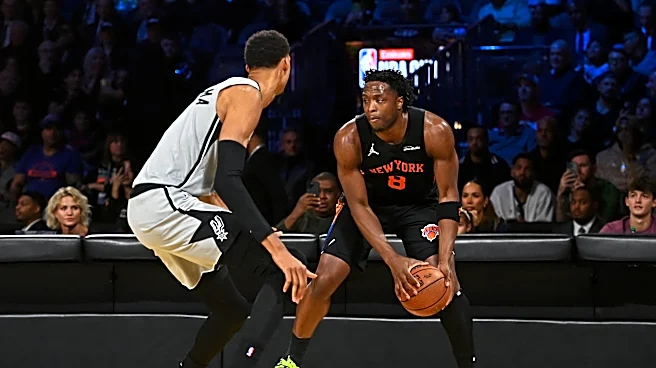
The back four in a 4-3-3 aren't just stationary defenders; they are integral to the attack. The two center-backs are the last line of defense, akin to your primary rim protectors like Rudy Gobert or Anthony Davis. But just like modern centers are now expected to be able to pass and move, modern center-backs must be comfortable on the ball. The real parallel, however, is with the full-backs. These players patrol the sidelines, defending opposing wingers but also surging forward to provide offensive width. In the NBA, this is your quintessential “3-and-D” wing. Players like Mikal Bridges or OG Anunoby are tasked with locking down the opponent’s best scorer, but they are also crucial cogs in the offense, expected to hit open corner threes and make the right pass. They are the ultimate role players, providing structure on defense and value on offense—the connective tissue of a championship-caliber team.