




England vs. Argentina: War and the 'Hand of God'
This intercontinental rivalry is the definition of soccer as a proxy battle. While the teams had met before, the bitterness was cemented by the 1982 Falklands War, a brief but brutal conflict over islands the British call the Falklands and Argentinians
know as the Malvinas. Just four years later, they met in the 1986 World Cup quarter-final. For Argentina, it was a chance to reclaim national pride after a humiliating military defeat. The match became legendary for two goals from Diego Maradona. First, the infamous "Hand of God," where he punched the ball into the net. Four minutes later, he scored the "Goal of the Century," an astonishing solo run. Maradona himself said it was "revenge." The game perfectly captured the blend of controversy and brilliance that fuels this rivalry, turning every future meeting into a replay of that historical drama.
USA vs. Mexico: The Battle for North American Supremacy
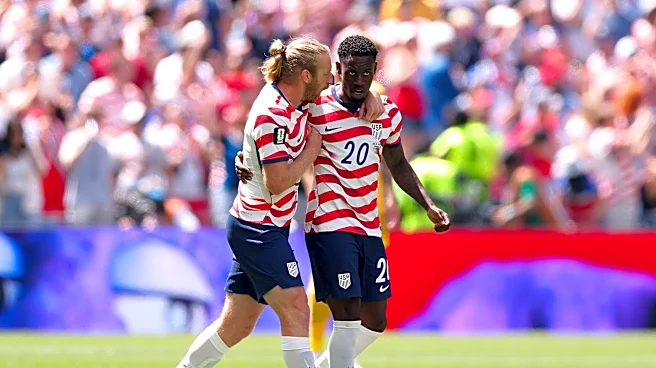
For American fans, there is no bigger rival than Mexico. This is a rivalry born of proximity and a fight for regional dominance in CONCACAF. For decades, Mexico was the undisputed king of North American soccer, enjoying a 24-game unbeaten streak against the U.S. from the 1930s to 1980. But as the U.S. has grown as a soccer nation, the rivalry has become fiercely competitive and often contentious. Matches are frequently played in front of divided crowds in U.S. stadiums. The U.S. famously beat Mexico 2-0 in the 2002 World Cup knockout stage, a result that still stings for El Tri fans and remains a point of pride for the USMNT. This isn't about ancient history; it's a modern power struggle between neighbors, making it one of the most intense and personal rivalries for U.S. sports fans.
Germany vs. Netherlands: A Grudge Rooted in War
The rivalry between Germany and the Netherlands is arguably the most politically charged in European football. Its origins are deeply rooted in the German occupation of the Netherlands during World War II. The animosity exploded onto the soccer pitch in the 1974 World Cup final, where a beautiful Dutch team led by Johan Cruyff lost to West Germany. Dutch player Wim van Hanegem famously explained his anger, saying, "They murdered my family. My father, my sister, two brothers. Each time I faced Germany, I was angst-filled." The Dutch got their revenge in the Euro 1988 semi-final, a victory on German soil that was celebrated in the Netherlands as if they had won the entire tournament. Ugly incidents, like Frank Rijkaard spitting on Rudi Völler in 1990, have only added to the bitterness.
Brazil vs. Argentina: A Purely Footballing Superpower Clash
Unlike rivalries defined by war, the clash between Brazil and Argentina is about one thing: football. It is the Superclásico of the Americas, a battle for continental and global supremacy between two of the most successful and passionate soccer nations on earth. It’s a rivalry of styles, of Pelé versus Maradona, of five World Cup titles for Brazil versus three for Argentina. Their meetings in the Copa América and World Cup qualifiers are legendary for their intensity, skill, and occasional chaos. A 1937 match was so hostile the Brazilian team feared for their safety, and a 1990 World Cup game was marred by accusations that Argentina gave a Brazilian player a water bottle spiked with tranquilizers. For fans in Buenos Aires and Rio de Janeiro, beating their neighbor is second only to winning the World Cup itself.