
From Folk Tradition to Artistic Muse
The story of the peasant blouse begins not in the luxury ateliers of Paris, but in the rural villages of Eastern Europe, particularly Romania. Originally a practical garment made of linen or hemp, it was
distinguished by intricate embroidery around the neck and sleeves, with motifs that could tell the story of a woman's life, status, and hopes. Worn by peasant women for centuries, its journey into the wider world began when it was adopted by Romanian royalty like Queen Marie, who wore it as a patriotic symbol. Soon after, it captivated the art world when Henri Matisse, gifted a collection of blouses, immortalized them in his famous "La Blouse Roumaine" series in the 1940s. This was the first hint that the garment had a significance far beyond its rustic origins.
The Counter-Culture's Uniform of Freedom
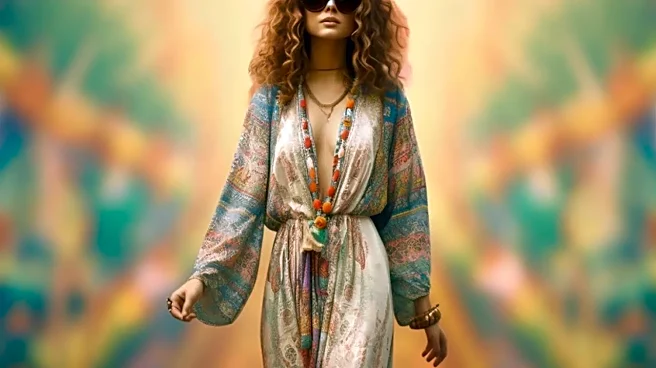
For the peasant blouse to become an American staple, it first had to be adopted by those who rejected American convention. In the early 20th century, bohemians in places like Greenwich Village embraced the blouse to signal their departure from rigid societal standards. But its defining American moment came during the 1960s and '70s. As the counter-culture movement swept the nation, the peasant blouse became a uniform for hippies who prized freedom, simplicity, and a return to nature. Paired with flowing skirts and bell-bottoms, the blouse was a soft, unstructured, and pointedly un-corporate symbol of protest against the establishment. It was a rejection of the buttoned-up aesthetics of the previous generation, signifying a desire for a more authentic, less materialistic way of life.
The High-Fashion Seal of Approval
The garment's transformation from folk item to luxury staple was cemented in 1976. Designer Yves Saint Laurent, in his legendary "Ballets Russes" collection, took the humble peasant blouse and reimagined it in opulent fabrics like silk and wool challis. This collection was a sensation, elevating the blouse from a counter-culture symbol to a must-have high-fashion item. Suddenly, the blouse was no longer just for hippies; it was for the jet set. This was the crucial pivot. By embracing the blouse, high fashion didn't erase its history of rebellion; it absorbed it. The garment now carried a dual meaning: it was both a nod to a free-spirited past and a signifier of sophisticated, worldly taste.
The Modern uniform of Effortless Success
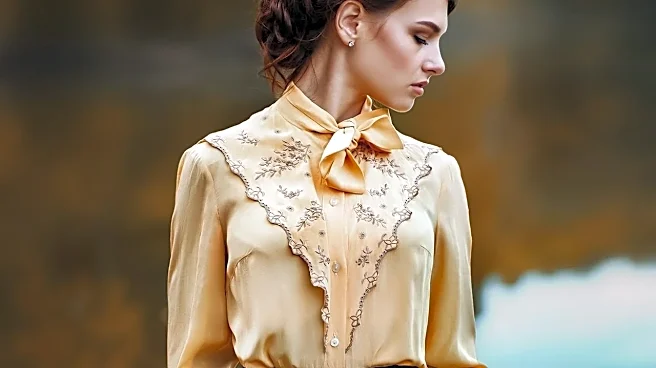
Today, the peasant blouse is a cornerstone of a uniquely American aesthetic that telegraphs casual wealth and creative success. It’s the top worn by the tech founder to a casual meeting, the Hollywood producer on a weekend, or the lifestyle entrepreneur for a brand photoshoot. Its loose, billowy fit suggests a freedom from the rigid constraints of a traditional office. The intricate embroidery hints at an appreciation for artisanal, handcrafted quality—an antidote to mass-produced fast fashion. To wear a peasant blouse today is to make a quiet statement. It says you are successful enough not to need the armor of a power suit, creative enough to appreciate craft, and confident enough to embrace ease. It’s the look of someone who has achieved a level of success that affords them the luxury of looking like they’re not trying too hard.